
1mm Copper Foil Wire Braided Mesh Tube
The 1mm Copper Foil Wire Braided Mesh Tube is a high-performance shielding sleeve crafted from 99.9% pure copper foil strips woven into an expandable, continuous conductive mesh. Each flat wire strand presents a wide contact surface, achieving surface resistivity below 0.01 Ω/sq and shielding effectiveness that often surpasses 70 dB from 30 MHz to 1 GHz. Unlike traditional round-wire braids, the foil construction eliminates pinholes and gaps, providing true 360° coverage essential for sensitive automotive CAN bus lines, aerospace fly-by-wire harnesses, and medical MRI cables. The 1 mm foil thickness strikes an ideal balance between flexibility and mechanical toughness—resisting abrasion, cut-through, and vibration fatigue in engine bays and robotic joints. For projects requiring specific bundle diameters, we supply a complete size range. The 41mm Copper Foil Wire Braided Mesh Tube accommodates cable assemblies near 41 mm OD, while the 42mm Copper Foil Wire Braided Mesh Tube gives a slightly looser fit for thicker jackets. For large power distribution harnesses, the 43mm Copper Foil Wire Braided Mesh Tube and the 44mm Copper Foil Wire Braided Mesh Tube step up the inner diameter while preserving identical foil quality and electrical performance. All variants are braided on precision machines that lock a 45° braid angle, optimizing expansion and spring-back memory. The open weave promotes heat dissipation—an added benefit in high-current EV battery packs. The table below presents the core specifications shared by the entire family.
| Parameter | Specification |
|---|---|
| Base material | 99.9% pure copper foil (tin plating optional) |
| Foil thickness | 1 mm ±0.05 mm |
| Braid pattern | Flat wire, one-over-one plain weave |
| Optical coverage | ≥ 90% at nominal ID |
| Surface resistivity | ≤ 0.01 Ω/sq |
| Shielding effectiveness | 60–80 dB (30 MHz – 1 GHz) |
| Continuous temp. range | -50°C to +200°C |
| Flammability rating | UL94 V-0 equivalent |
| Standard reel lengths | 25 m, 50 m, 100 m |
| Regulatory compliance | RoHS, REACH, ISO 9001 |
The 1mm Copper Foil Wire Braided Mesh Tube stands out for its tool-free installation. The mesh expands radially up to 150% of its nominal ID, allowing it to slide over pre-terminated connectors and then contract into a snug, conductive wrap. This eliminates the labor and risk of connector disassembly. Grounding is straightforward: the tube can be terminated with copper foil tape, crimped ring terminals, or soldered directly to chassis ground, creating a low-inductance drain path. Engineers in automotive and aerospace sectors regularly cite the following practical advantages of this copper foil tube:
- Can be cut cleanly with standard scissors or a hot knife; cut edges self-fringe slightly but do not unravel
- Memory effect keeps the braid closed after repeated expansions, preventing coverage gaps
- Lightweight profile—typical 1mm tube weighs under 95 g/m, helping meet mass reduction targets
- Resistant to common solvents, fuels, and hydraulic fluids found in engine compartments
- Optional tin-plated surface enhances solderability and withstands salt-spray corrosion (≥ 96 hours)
- Flame-retardant behavior passes UL94 V-0, an important requirement for enclosed electrical enclosures
To illustrate the performance consistency across sizes, the following table lists the most popular diameters from the 1mm Copper Foil Wire Braided Mesh Tube range. Each variant uses identical 1 mm foil and braid construction, so electrical and thermal properties remain unchanged—only the inner dimension varies to match cable bundles.
| Inner Diameter (mm) | Order Code | Expansion Range (OD, mm) |
|---|---|---|
| 41 | CFBT-41-1.0 | 35 – 48 |
| 42 | CFBT-42-1.0 | 36 – 50 |
| 43 | CFBT-43-1.0 | 37 – 52 |
| 44 | CFBT-44-1.0 | 38 – 54 |
The 1mm Copper Foil Wire Braided Mesh Tube undergoes 100% inline continuity testing during braiding, ensuring every meter meets the ≤0.01 Ω/m requirement. When combined with a conductive adhesive copper foil tape at both ends, the assembly becomes a water-tight, shielded conduit suitable for marine and outdoor telecom installations. The tube also accommodates slight bends and flexing; durability tests confirm stable shielding after 50,000 flex cycles at a 90° bend radius. Custom diameters that fall outside the 41–44 mm standard window—whether smaller or larger—can be produced with the same 1mm foil specification to meet unique project demands. Its all-copper construction additionally provides a premium, industrial aesthetic for visible cable management in high-end custom builds.
Related Products


Hot Products

Bare Copper Strand Wire
Bare Copper Strand Wire produced by Quande Electronics is a wire made of multiple bare copper wires twisted together. Bare copper stranded wire is more flexible: the structure of multiple copper wires twisted together gives it a certain degree of flexibility. Compared with a single copper rod, it is easier to bend and operate, and is convenient for laying in various complex installation environments, such as wiring connections inside distribution cabinets or laying electrical lines in buildings. - High mechanical strength. By twisting, the mechanical strength of bare copper stranded wire is increased compared to that of a single copper wire. It can withstand a certain amount of pulling and tension, and in scenes such as overhead transmission lines, it can resist external forces caused by natural factors such as wind and ice.
Tinned Copper Flexible Braids
Tinned Copper Flexible Braids is a belt-shaped product with good flexibility woven from tinned copper wire as raw material. Its flexibility comes from the braided structure, which allows the braided belt to bend and twist to a certain extent, and can better adapt to different installation environments and connection requirements. Quande Electronics Manufacturer selects high-quality raw material tinned copper wire and weaves it with a high-speed braiding machine. The product surface is free of breaks and burrs.
Tinned Copper Stranded Wire
Tinned copper stranded wire excels in power transmission, widely used in overhead power lines, indoor wiring, and as carriers for electrical equipment. It's integral to communication cables, such as old telephone lines or weak current systems, and connects components in devices like distribution cabinets and boxes. Quande Electronics ensures standardized production with a skilled team, minimizing errors and uncertainties.
2.0MM Solder Wick Braid Wire
The 2.0MM Solder Wick Braid Wire is a tool used to remove excess solder from electronic components such as circuit boards. The tin-absorbing copper braid is mainly woven from copper wire. The pure copper tin-absorbing copper braid has good electrical and thermal conductivity, and can quickly transfer heat to melt and absorb the solder. Quande Electronics keeps up with the latest development trends and cutting-edge technologies in the field of copper braiding, constantly updating knowledge and skills to maintain a leading position.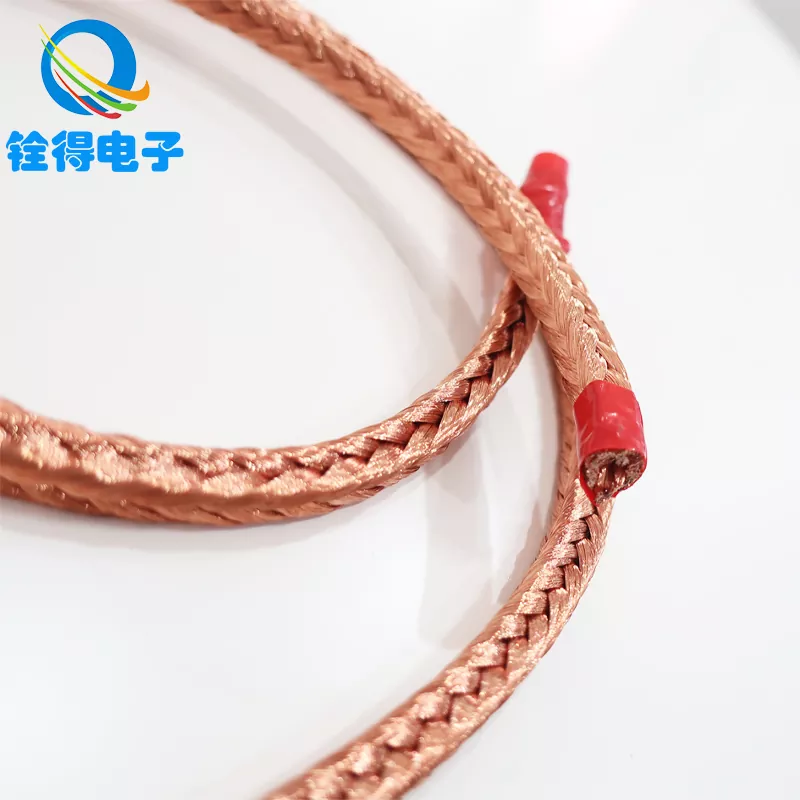
Square Copper Braided Wire
The traditional square copper braided wire is braided into a copper braided belt through single or multiple strands, and then extruded into a square braided belt through the outlet of the braiding machine. It is easy to cause damage during the extrusion process. Therefore, when weaving, you must wear gloves to carefully protect the wiring. The density should not be too dense, otherwise the machine will not be able to weave and it is easy to cut the copper wire.
Flexible Copper Stranded Wires For Electric Brush
The Flexible Copper Stranded Wires For Electric Brush produced by Quande Electronics is a kind of wire used in electric brushes. It is made of multiple strands of fine copper wires, has good flexibility, can adapt to the bending and twisting movements of electric brushes at work, effectively transmit current, and ensure the normal operation of electric brushes.
- Related Blog
- Reviews

Related Search
Send Inquiry


X
We use cookies to offer you a better browsing experience, analyze site traffic and personalize content. By using this site, you agree to our use of cookies.
Privacy Policy