
China Strong 0.2mm Nickel-Plated Copper Flat Braided Wire Manufacturer, Supplier, Factory
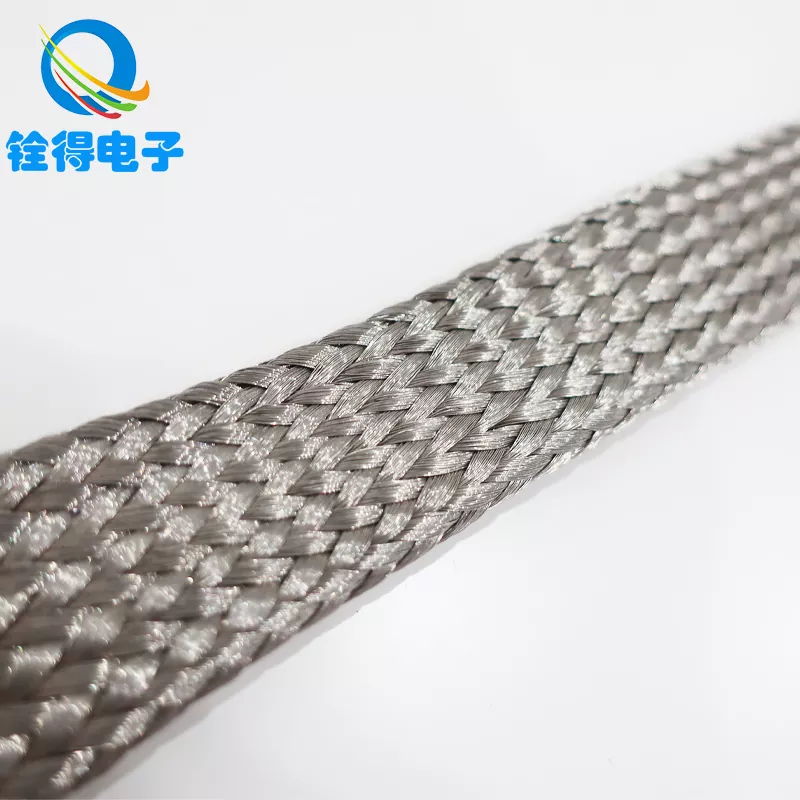
When selecting conductive materials for demanding electrical applications, the choice of braided wire directly impacts system reliability and performance. Our Strong 0.2mm Nickel-Plated Copper Flat Braided Wire stands out as a premium solution, engineered for superior conductivity, flexibility, and corrosion resistance. Unlike conventional round wires, this flat braided design maximizes surface area, reducing impedance and improving heat dissipation. It serves a wide array of industries, from automotive grounding straps to renewable energy inverters, where stable low-resistance connections are non-negotiable. For projects requiring different dimensions or slightly varied properties, we also offer complementary products such as Flexible Nickel-Plated Copper Flat Braided Wire in various sizes, the thinner 0.1mm Nickel-Plated Copper Flat Braided Wire for space-restricted installations, the 0.15mm Nickel-Plated Copper Flat Braided Wire balancing thickness and pliability, and the featured 0.2mm Nickel-Plated Copper Flat Braided Wire itself, which delivers an optimal blend of mechanical strength and electrical efficiency. The nickel plating provides a durable protective layer that withstands oxidation and harsh environments, extending the operational life well beyond bare copper alternatives.
Strong 0.2mm Nickel-Plated Copper Flat Braided Wire is manufactured to exacting standards, ensuring each wire strand contributes to a cohesive, high-performance conductor. The core consists of ultra-pure electrolytic copper, drawn into fine strands with a typical diameter of 0.2mm per strand. These strands are then flat-braided using advanced machinery that maintains consistent tension, resulting in a uniform width and thickness profile. The nickel layer is applied through a precisely controlled electroplating process, achieving a minimum coating thickness of 2 microns uniformly across all surfaces. This plating not only prevents tarnish but also maintains solderability over long storage periods, a critical factor in automated assembly lines. Below are the key specifications at a glance:
- Conductor Material: Oxygen-free high-conductivity copper (Cu-ETP), purity ≥99.95%
- Plating Material: Electrolytic nickel, thickness 2–5µm (customizable)
- Strand Diameter: 0.2mm ±0.01mm
- Flat Braided Width: Available from 4mm up to 50mm
- Cross-sectional Area: Calculated per strand count, e.g., 10mm² to 120mm²
- Maximum DC Resistance: ≤0.017241 Ω·mm²/m at 20°C (bare copper equivalent, adjusted for plating)
- Temperature Range: -55°C to +200°C (continuous operation), short-term up to 250°C
- Tensile Strength: 250–300 MPa for annealed strands, with overall braid strength depending on strand count
- Solderability: Meets IEC 60068-2-20 Ta test, shelf life >12 months under recommended storage
- Standards Compliance: RoHS, REACH, and IEC 60228 Class 5/6 flexibility
Performance reliability is verified through rigorous testing. The braid offers excellent vibration damping and maintains electrical continuity even under dynamic flexing, making it ideal for applications involving constant movement or thermal expansion. To help you select the right configuration, the following table presents popular part numbers and their corresponding electrical and mechanical characteristics:
| Part Number | Strands x Diameter | Nominal Width (mm) | Nominal Cross Section (mm²) | DC Resistance at 20°C (Ω/km) | Current Rating (A) * | Unit Weight (kg/100m) |
|---|---|---|---|---|---|---|
| NCFB-0.2-24-10 | 24 × 0.20mm | 6.0 | 0.754 | 24.5 | 12 | 0.68 |
| NCFB-0.2-64-16 | 64 × 0.20mm | 10.0 | 2.01 | 9.2 | 28 | 1.82 |
| NCFB-0.2-144-25 | 144 × 0.20mm | 14.0 | 4.52 | 4.1 | 55 | 4.10 |
| NCFB-0.2-288-35 | 288 × 0.20mm | 18.0 | 9.05 | 2.05 | 90 | 8.18 |
| NCFB-0.2-480-50 | 480 × 0.20mm | 25.0 | 15.08 | 1.23 | 140 | 13.6 |
* Current ratings are guidelines for freely suspended horizontal cables in still air at 25°C ambient; derating factors apply for bundled or enclosed installations.
Custom configurations are readily available: strand count, flat braid width, nickel thickness, and even hybrid constructions with tinned copper can be quoted upon request. The flat profile minimizes space requirements inside conduit or equipment enclosures while maximizing contact area at terminations. Crimp, solder, and ultrasonic welding are all compatible joining methods, backed by our technical support team to ensure seamless integration. Whether you are upgrading a power distribution busbar or designing a flexible grounding jumper, this braided wire delivers the durability and conductivity your system demands.
Related Products



Hot Products

Enamelled Copper Insulated Braided Tape
Enamelled Copper Insulated Braided Tape is a conductive material with special structure and performance. Its core is copper wire, which can provide good conductivity. These copper wires are first enameled, and the lacquer layer is tightly wrapped on the surface of the copper wire to play an insulating role, preventing the copper wires from conducting each other or accidentally short-circuiting with external conductors. The enameled copper wires are then woven into a tape. The weaving method makes the braided tape relatively soft and has a certain toughness, which can be appropriately bent and deformed in different installation environments.
3.5MM Solder Wick Braid Wire
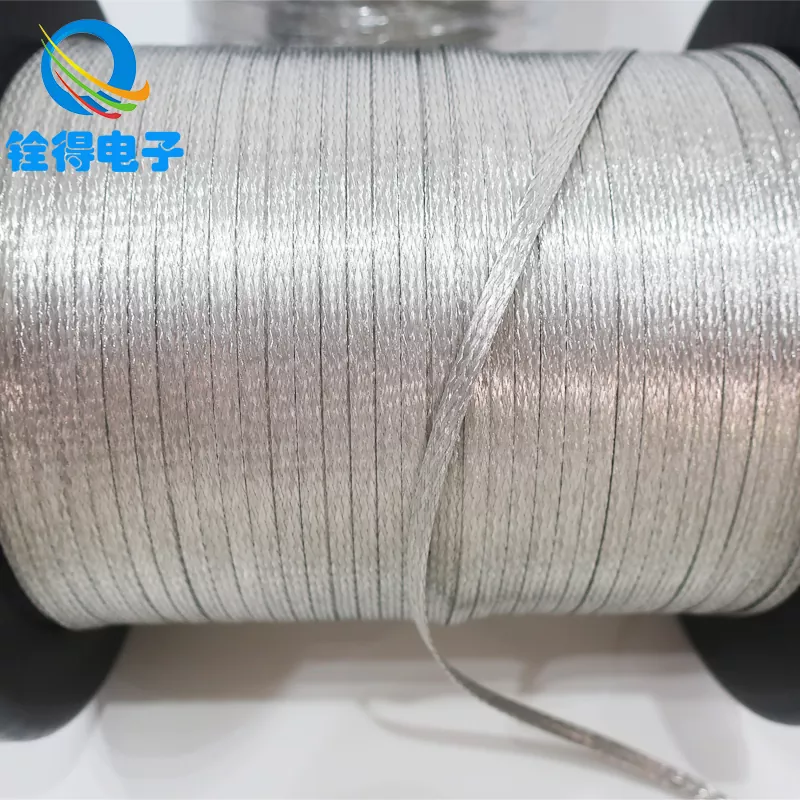
The 3.5MM Solder Wick Braid Wire is a tool used to remove excess solder from electronic components such as circuit boards. The tin-absorbing copper braid is mainly woven from copper wire. The pure copper tin-absorbing copper braid has good electrical and thermal conductivity, and can quickly transfer heat to melt and absorb the solder. Quande Electronics keeps up with the latest development trends and cutting-edge technologies in the professional field, constantly updates knowledge and skills, and maintains a leading position.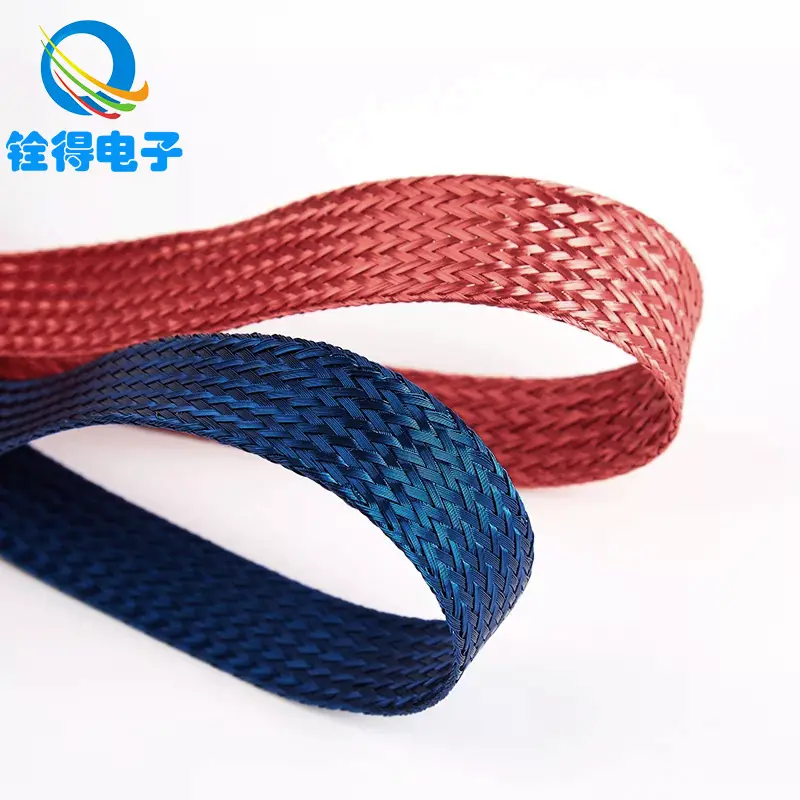
Enamelled Copper Braided Wire
The Enamelled Copper Braided Wire produced by Quande is enameled on the basis of copper braided wire. The enameled copper braided wire has good insulation performance, can prevent current leakage and avoid short circuit, and is a good choice for electrical equipment with strict requirements.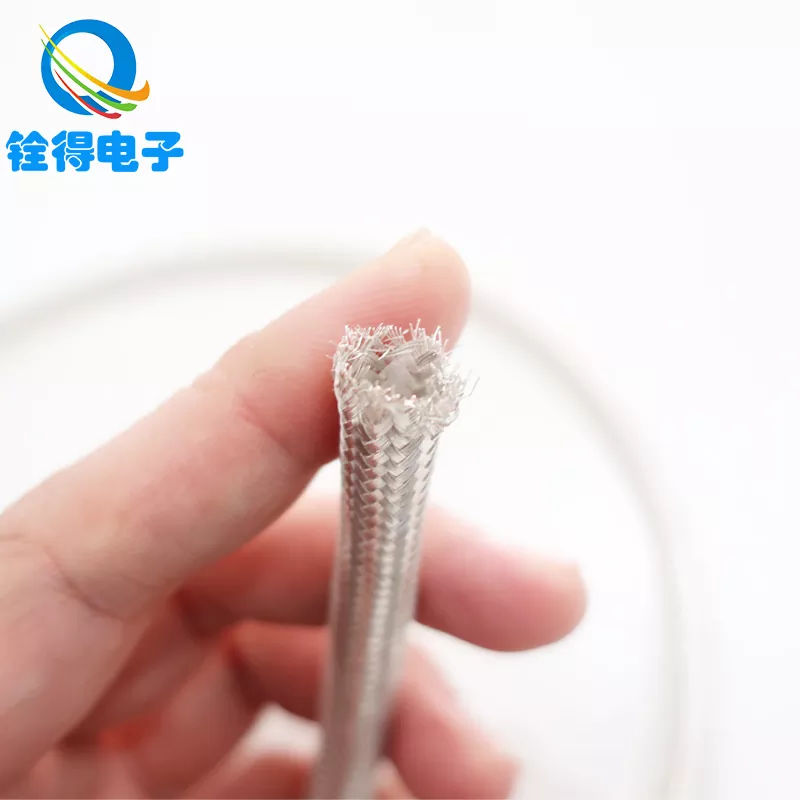
Pure Copper Silver-Plated Braided Mesh Tube
The production process of pure copper silver-plated braided mesh tube: select silver-plated copper wire that meets the requirements as the braiding material. Before braiding, the silver-plated copper wire needs to be inspected to measure whether the wire diameter meets the national standard tolerance; whether the appearance is oxidized and blackened, and ensure that the surface of the material is clean, free of impurities and oil.
Ground Cable For Bridge
The main purpose of the Ground Cable For Bridge is to ensure the electrical safety of the bridge and prevent static electricity accumulation and overvoltage damage such as lightning. In terms of installation, flat steel or copper braided wire is generally used as the grounding wire. If flat steel is used, the specifications usually must meet the design requirements and be laid along the entire length of the bridge. The starting and ending ends of the bridge must be reliably connected to the grounding device, and the bridge needs to be connected to the grounding wire at intervals (such as no more than 30m). The connection must be firm and the resistance at the connection must be small enough. Quande has strong emergency handling capabilities and can quickly adjust production arrangements in the face of emergencies to minimize the impact on delivery time.
Cable Cord Copper Stranded Wire
The Cable Cord Copper Stranded Wire produced and sold by Quande Electronics is a conductor made of multiple copper wires twisted together, used to transmit current in cables. It has good conductivity, flexibility and mechanical strength, and is often used in power transmission, electrical equipment connection and other fields. Different twisting methods, copper wire diameters and strand numbers can be selected according to needs to meet specific requirements.
- Related Blog
- Reviews

Send Inquiry


X
We use cookies to offer you a better browsing experience, analyze site traffic and personalize content. By using this site, you agree to our use of cookies.
Privacy Policy