
How Does Braided Copper Tube Improve Flexible Power and Ground Connections?
Abstract
If you’ve ever dealt with cracked lugs, overheated jumpers, nuisance trips, or noisy signals near high-current equipment, you already know the real enemy: rigid connections in places that move, vibrate, expand, or need easy service access. Braided Copper Tube is designed for exactly those “everything is fine until it isn’t” environments. It combines high conductivity with flexibility, helping you build connections that stay reliable under thermal cycling, mechanical motion, and tight installation spaces.
This guide breaks down what Braided Copper Tube is, where it shines, what customers commonly get wrong when selecting it, and how to specify it correctly the first time. You’ll also find sizing tips, a practical comparison table, installation best practices, and a short FAQ to help you move from “we need something flexible” to a clear, purchase-ready spec.
Table of Contents
- Outline
- What Is Braided Copper Tube
- Customer Pain Points It Solves
- Typical Use Cases
- How to Choose the Right Specification
- Practical Tables for Sizing and Matching
- Installation and Handling Tips
- Quality Checklist Before You Buy
- Working with Dongguan Quande Electronics Co.,Ltd.
- FAQ
- Next Steps
Outline
- Define Braided Copper Tube in plain language and explain how it behaves in real installations.
- Map common failure scenarios to the design benefits of a braided tubular conductor.
- Show the most common applications and what matters most in each one.
- Provide a selection framework: material, plating, braid density, dimensions, and termination approach.
- Share easy-to-use tables so buyers can align performance needs with a clear specification.
- Finish with handling tips, a quality checklist, and a buyer-friendly FAQ.
What Is Braided Copper Tube
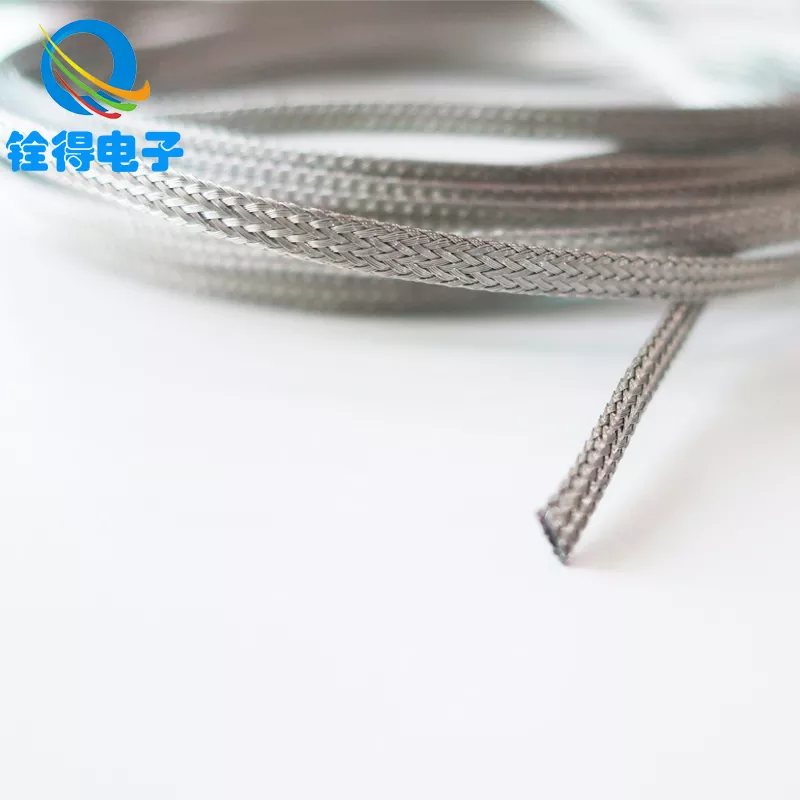
Braided Copper Tube is a tubular braid made from multiple strands of copper wire woven into a flexible sleeve or tube shape. Depending on the design, it can be used as:
- A flexible conductor (carrying current between two points where movement or expansion occurs)
- A grounding path (bonding enclosures, doors, cabinets, busbars, and rotating or vibrating assemblies)
- An electromagnetic shield (reducing interference by providing a conductive enclosure around cables or assemblies)
- A protective sleeve (guarding hoses/cables from abrasion while adding conductivity)
Key idea: A braid distributes stress. Instead of one rigid piece taking all the strain, many fine wires share the load. That’s why braided tubular conductors hold up better when equipment vibrates, heats up, cools down, or needs frequent access.
Unlike a solid copper bar or a stiff cable, a braided tube can bend repeatedly and conform to tight spaces. It can also “breathe” with thermal expansion: as temperatures rise, metal parts expand; when they cool, they contract. A braided structure tolerates that cycle with less risk of loosening hardware, cracking at the lug, or transferring stress into sensitive terminals.
Customer Pain Points It Solves
Buyers typically start looking for Braided Copper Tube after experiencing one of these problems:
- Overheating at connection points caused by insufficient contact area, poor flexibility, or movement-induced micro-gaps.
- Cracked lugs and broken strands where rigid conductors are forced to flex during vibration or servicing.
- Loose fasteners over time due to thermal cycling and mechanical motion transferring stress into the joint.
- Noise and interference near inverters, transformers, switchgear, welders, or EV charging equipment.
- Hard-to-install jumpers in cramped cabinets where bend radius becomes a fight.
- Premature corrosion in humid, coastal, or chemically active environments when materials aren’t matched to conditions.
A well-specified braided tube addresses these issues by combining conductivity, flexibility, and surface coverage. The result is a connection that’s easier to route, more stable over time, and less sensitive to small shifts that would punish a rigid part.
Typical Use Cases
Here are real-world places where Braided Copper Tube is commonly used, and what decision-makers usually care about most:
- Switchgear and busbar systems: flexible links between busbars or components that heat under load.
- Transformers and power distribution: grounding and bonding to reduce fault risk and maintain stable potential.
- Rail and automotive platforms: vibration-resistant bonding and flexible current paths.
- EV/charging and inverter systems: managing high current while reducing electrical noise.
- Industrial cabinets and enclosures: door bonding straps and grounding paths that must flex with opening/closing.
- EMI shielding for cables and assemblies: a conductive tube around cables to reduce interference sensitivity.
Quick sanity check: If your connection point moves, heats, vibrates, or needs frequent maintenance access, braided solutions should be on your shortlist.
How to Choose the Right Specification
The best Braided Copper Tube for your project depends on how it will be used: current level, duty cycle, environment, required flexibility, and termination method. Below is a practical selection framework you can hand to engineering, purchasing, and your supplier.
1) Copper type and conductivity expectations
- Bare copper: strong conductivity, common in controlled environments.
- Tinned copper: better oxidation resistance and easier solderability, often preferred for humid or variable conditions.
- Special plating: used for unique corrosion or interface needs (choose based on environment and mating materials).
2) Braid construction and density
- Wire diameter and strand count influence flexibility and durability.
- Braid coverage affects shielding performance and contact stability.
- Expansion ratio matters when the tube must fit over a range of diameters.
3) Dimensions that actually matter
- Inner diameter (ID): whether it fits over your target part or cable bundle.
- Outer diameter (OD): whether it fits inside glands, clamps, or routing channels.
- Length and service loop: leaving enough slack to prevent the braid from becoming the “spring” in your joint.
4) Termination method
- Crimped lugs/ferrules: common for grounding straps and jumpers.
- Welded/brazed ends: used when high reliability and low contact resistance are needed.
- Clamp or band termination: often used for shielding applications to maintain 360-degree contact.
5) Environment and corrosion reality
- Humidity, salt exposure, industrial chemicals, and dissimilar metals can change what “good enough” looks like.
- If your equipment lives outdoors or near salt air, plating choice and joint protection become non-negotiable.
Practical Tables for Sizing and Matching
Table 1: Matching application needs to braided tube characteristics
| Application Scenario | Main Risk | What to Prioritize | Typical Spec Direction |
|---|---|---|---|
| Cabinet door bonding | Repeated flexing, loosened ground | Flexibility, fatigue resistance | Fine strands, moderate coverage, tinned copper if humidity is present |
| Busbar jumper in switchgear | Thermal cycling, high current | Low resistance, stable terminations | Higher cross-sectional area, robust ends (crimped/welded), controlled length |
| Shielding sleeve for cables | Electrical noise, poor 360° contact | Coverage, consistent contact | High braid coverage, clamp termination, correct ID/OD selection |
| Vibration-heavy platforms | Broken conductors and cracked lugs | Flex life, strain relief | Fine strands, service loop, mechanical protection at endpoints |
| Humid or coastal environment | Oxidation, corrosion at interfaces | Surface protection, joint sealing | Tinned copper, compatible hardware, heat-shrink or sealing strategy |
Table 2: Buyer-friendly checklist for specifying Braided Copper Tube
| Parameter | What You Provide | Why It Matters |
|---|---|---|
| Use type | Conductor / grounding / shielding / protective sleeve | Determines braid density, termination style, and performance targets |
| Material & finish | Bare copper / tinned copper / other plating | Changes corrosion resistance and interface behavior |
| ID / OD range | Minimum and maximum fit diameter | Ensures installability without overstretching or poor contact |
| Length | Finished length and whether slack is allowed | Too short increases strain; too long can snag or reduce neatness |
| Current & duty | Approximate current, duration, temperature environment | Guides cross-sectional area and thermal margin |
| Termination | Crimp / weld / clamp / custom | Most field failures happen at ends, not in the braid itself |
| Compliance needs | Any material restrictions and test expectations | Prevents rework late in procurement and production |
Selection shortcut: If you don’t have a full electrical model, start by documenting the motion/vibration level, the expected temperature swing, and how the braid will be terminated. Those three details eliminate most wrong options fast.
Installation and Handling Tips
Even the best Braided Copper Tube can underperform if it’s cut, handled, or terminated poorly. These field-friendly tips reduce rework and failures:
- Prevent fraying during cutting: use a method that keeps strands contained (tape wrap before cutting, or use appropriate tooling).
- Add a service loop when movement exists: allow gentle curves rather than tight bends at the termination point.
- Protect the ends: heat shrink, boots, or sleeves can reduce abrasion and keep stray strands from spreading.
- Ensure clean mating surfaces: remove oxidation or debris where lugs or clamps contact metal.
- Mind dissimilar metals: if your hardware is not copper-friendly, consider surface protection strategies to reduce galvanic issues.
- Torque matters: consistent fastening reduces micro-movement and stabilizes contact resistance.
For shielding uses, prioritize 360-degree contact: a braid that’s only touched at one small point may look installed but won’t deliver consistent noise reduction. For high-current jumpers, focus on end integrity: robust crimping or engineered end treatments typically create the biggest reliability difference.
Quality Checklist Before You Buy
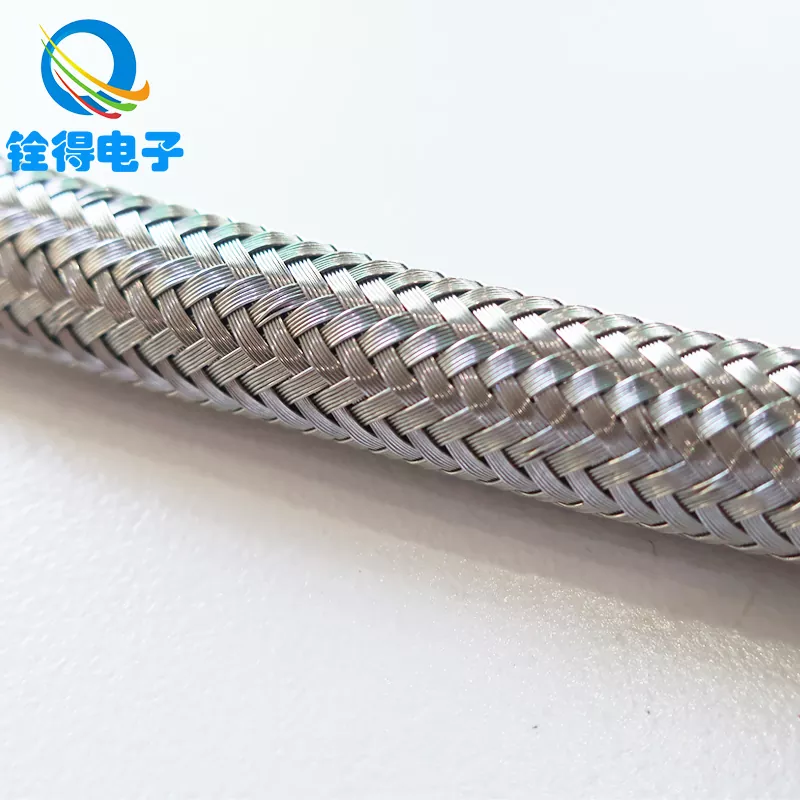
If you’re sourcing Braided Copper Tube for critical equipment, you want predictable conductivity, consistent braid geometry, and stable materials. Use this checklist when reviewing samples or supplier documentation:
- Material consistency: confirm copper grade and finish match your environment and joining method.
- Braid uniformity: check for gaps, inconsistent picks, or uneven coverage along the length.
- Dimensional stability: verify ID/OD under relaxed and installed conditions, especially if stretching is involved.
- Termination reliability (if assembled): inspect crimp symmetry, pull strength expectations, and end sealing.
- Packaging and handling: poor packaging can deform braids or cause contamination before the part even reaches your line.
Practical buyer move: ask for one short production run sample made with your exact termination style and mounting hardware. It’s the quickest way to reveal mismatch between design assumptions and real assembly behavior.
Working with Dongguan Quande Electronics Co.,Ltd.
When you’re buying braided conductors, you’re not only buying copper—you’re buying repeatability: the same braid density, the same fit, and the same termination outcome every time your production line runs. Dongguan Quande Electronics Co.,Ltd. provides Braided Copper Tube solutions designed for applications where flexibility, conductivity, and durability have to live together in the same part.
If you already have a drawing or a legacy part number, you can usually translate that into a clear specification quickly. If you don’t, a practical spec can still be built from a few inputs: where it’s installed, how it moves, what it connects to, and what environment it lives in. That’s often enough to narrow down material, size range, and end treatment options without trial-and-error purchasing.
FAQ
Q: Can Braided Copper Tube carry high current safely?
A: Yes, when sized appropriately and terminated correctly. For high-current paths, end treatment and contact quality are just as important as the braid itself. Provide your operating current range, duty cycle, and temperature environment to select a suitable cross-sectional area and termination strategy.
Q: Is tinned copper always better than bare copper?
A: Not always. Tinned copper tends to perform better in humid or oxidation-prone environments and can be friendlier for certain joining methods. Bare copper can be ideal in controlled conditions where maximum conductivity and clean interfaces are maintained.
Q: How do I prevent fraying during assembly?
A: Use controlled cutting methods and secure the braid before cutting (for example, wrapping the cut area). Consider end protection like heat shrink or sleeves to keep strands contained and improve handling.
Q: What’s the difference between using braided tube as a shield versus as a conductor?
A: Shielding depends heavily on braid coverage and continuous contact around the circumference. Conducting depends on cross-sectional area and robust end connections. Many products can do both, but the “best choice” changes with what you prioritize.
Q: What information should I send to get an accurate quote?
A: Share the use case (grounding, conductor, shielding), target ID/OD range, finished length, environment, and termination requirement. If you have photos of the installation space or a drawing, include those too—small details often prevent costly rework later.
Next Steps
If your current setup is suffering from heat, vibration, tight routing, or unreliable grounding, Braided Copper Tube is often the simplest upgrade that delivers a measurable stability boost. The fastest path to a correct selection is to define your installation constraints (space, motion, temperature swing) and your termination method. From there, the right material and braid construction usually become obvious.
Ready to match the right Braided Copper Tube to your application? Send your dimensions, environment details, and any drawings or photos to Dongguan Quande Electronics Co.,Ltd.—we’ll help you narrow down a practical specification and move quickly to samples. To get started, contact us and tell us where the braid will be used and how it will be terminated.
Send Inquiry


X
We use cookies to offer you a better browsing experience, analyze site traffic and personalize content. By using this site, you agree to our use of cookies.
Privacy Policy