
Why Choose Copper Braided Wires for Flexible, Low-Resistance Connections?
Abstract
Copper braided wires are the “quiet heroes” inside grounding systems, power distribution, welding equipment, switchgear, batteries, and vibration-prone machinery. Buyers usually don’t struggle with the idea of “braid” itself—they struggle with outcomes: unstable grounding, overheated jumpers, cracked lugs, unexpected downtime, and inconsistent quality from batch to batch. This guide breaks down how copper braided wires work, where they outperform solid conductors, how to specify the right braid, and how to avoid the most common sourcing mistakes. Along the way, you’ll find selection checklists, a practical comparison table, and a troubleshooting section so you can match your application to the right construction.
Table of Contents
- Outline
- What Are Copper Braided Wires and Where Are They Used?
- What Pain Points Do Copper Braided Wires Solve?
- How Do You Specify the Right Braid?
- Braid Options Compared in a Practical Table
- How Do You Install and Maintain Braided Connections?
- Troubleshooting: Why Does a Braid Overheat or Fail?
- What Quality Checks Actually Matter for Buyers?
- FAQ
- Closing Thoughts
Outline
- Define copper braided wires and the typical “jumper/ground strap” use cases
- Connect buyer pain points to measurable technical requirements
- Explain the key spec items: cross-section, strand count, plating, insulation, terminations
- Provide a decision table and a buyer checklist
- Cover installation practices that prevent hotspots and early failure
- Share a troubleshooting map for overheating, corrosion, fraying, and cracking
- Show what to request from a supplier for consistent quality and traceability
What Are Copper Braided Wires and Where Are They Used?
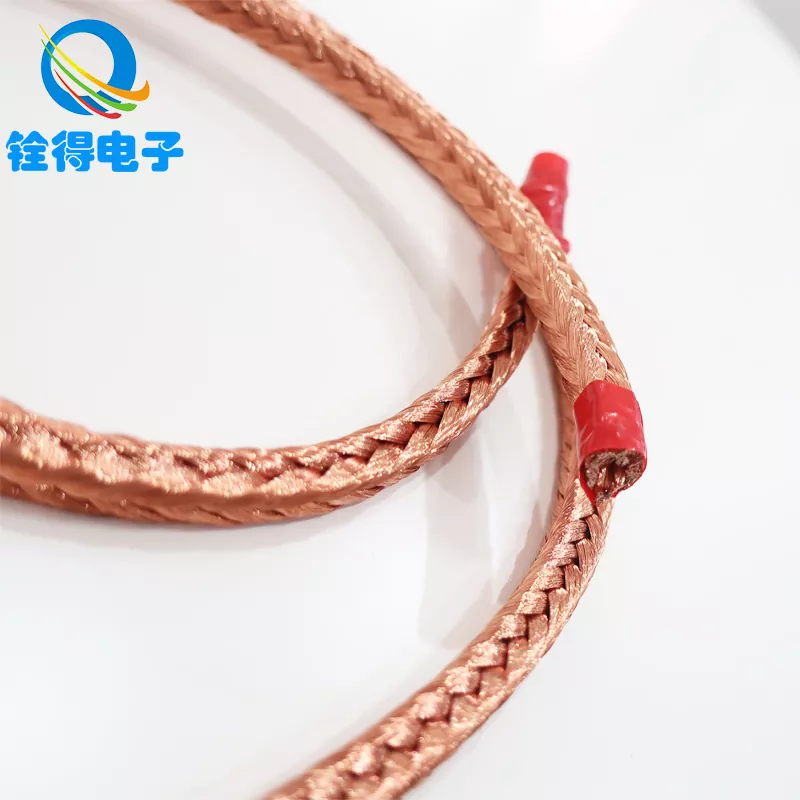
Copper braided wires are flexible conductors made by weaving many fine copper strands into a flat or tubular braid. Instead of forcing current through one rigid core, braid spreads current across multiple strands and across a larger surface area. That structure is why braided wires are so popular in places where movement, vibration, and repeated flexing would fatigue a solid conductor.
Common applications include:
- Grounding and bonding straps for cabinets, panels, busbars, and enclosures
- Flexible jumpers in switchgear, transformers, and UPS systems
- Battery and inverter connections where vibration and thermal cycling are frequent
- Welding equipment and high-current temporary connections
- Rail, automotive, and industrial machinery needing vibration-resistant grounding
- EMI control in shielding/grounding paths where low impedance matters
In many real-world builds, the braid itself isn’t the only component—termination choices (lugs, ferrules, welded ends), plating, and insulation are what determine whether the connection stays stable after months or years of service.
What Pain Points Do Copper Braided Wires Solve?
Most buyers come looking for copper braided wires after they’ve already been burned—sometimes literally. Here are the pain points that braid is designed to fix, and what to watch for so you don’t recreate the same failure with a different part number.
-
Cracked conductors from vibration
Solid wire and many cable constructions can work-harden and crack near terminations when equipment vibrates. Braided conductors distribute stress across many strands, reducing concentrated fatigue points. -
Hotspots at joints
Overheating rarely comes from the braid “not being copper enough.” It usually comes from high contact resistance: poor crimping, uneven compression, oxidation, or mismatched lug size. A well-made braid plus a properly engineered termination lowers resistance and keeps temperature rise under control. -
Unreliable grounding and nuisance faults
Ground paths need consistent low impedance. Braided straps are often chosen because their flexibility preserves contact integrity when doors, hinges, motors, or movable assemblies shift. -
Corrosion in humid or coastal environments
Bare copper can oxidize; in harsh environments, many buyers prefer tinned copper braided wires for improved corrosion resistance and more stable long-term conductivity at the surface. -
Assembly headaches
Braids are easy to route in tight spaces and around corners. But if strand count or weave density is wrong, installers may see fraying, messy cuts, or uneven compression under lugs.
If you want one “buyer’s truth” to take away: the braid’s flexibility is the advantage, but the termination is the outcome. Specify both.
How Do You Specify the Right Braid?
When people say “I need copper braided wires,” they often mean very different things: a lightweight bonding strap, a high-current jumper, or a shield drain. To avoid misquotes and mismatched shipments, specify the braid using application-first details.
1) Electrical requirement: current, duty cycle, and allowable temperature rise
- Define continuous vs. intermittent current (and peak current if relevant).
- Consider ambient temperature, enclosure ventilation, and nearby heat sources.
- Confirm whether the strap is for grounding/bonding (often shorter and lower voltage) or for load current (often higher current density concerns).
2) Cross-sectional area and braid construction
- Equivalent cross-section (often referenced in mm²) is a practical way to size a braid.
- Strand diameter and strand count affect flexibility and durability. More, finer strands generally increase flexibility.
- Braid width and thickness affect fit under terminals and routing constraints.
3) Plating and surface finish
- Bare copper: great conductivity, best for controlled environments.
- Tinned copper: better corrosion resistance, easier soldering, commonly chosen for industrial and marine-adjacent environments.
4) Insulation and protection
- Some braids are supplied bare; others use PVC, silicone, PET sleeving, or heat-shrink for abrasion protection.
- If the braid runs near sharp edges or moving parts, specify protective sleeving or a jacketed design.
5) Terminations: the detail that decides reliability
- Crimped lugs (ring/spade): common, fast, and reliable when properly sized and compressed.
- Pressed or welded ends: reduce strand splay and can improve consistency for high-volume assemblies.
- Hole size, tongue width, and bolt grade: small mismatch here causes loose joints and heating.
- Length tolerance: matters more than people expect in cramped enclosures.
One practical sourcing move: share a simple drawing with length, braid width/thickness, termination type, hole diameter, and plating. Even a basic sketch can prevent a week of back-and-forth.
Braid Options Compared in a Practical Table
| Option | Best For | Pros | Watch Outs |
|---|---|---|---|
| Bare copper braided wire | Indoor cabinets, controlled environments, short bonding straps | Excellent conductivity, cost-effective | Oxidation in humid/chemical exposure areas can raise contact resistance over time |
| Tinned copper braided wire | Humid factories, coastal regions, long service life expectations | Better corrosion resistance, more stable surface, easier soldering | Confirm tin thickness/consistency if the application is highly sensitive |
| Flat braid strap | Ground straps, busbar jumpers, low profile routing | Easy to bolt, good surface contact, flexible bend radius | Ensure width fits lug barrel and mounting footprint |
| Tubular braid | Shielding, flexible sleeves, applications needing round geometry | Good coverage, can slide over components | Not always ideal for bolted terminations without end treatment |
| Braid with insulation/sleeving | Abrasion-prone routing, moving parts, sharp edges | Reduces wear, improves safety and cleanliness | Check temperature rating and chemical compatibility of the sleeving |
How Do You Install and Maintain Braided Connections?
Even premium copper braided wires can fail if they’re installed like an afterthought. Most field issues trace back to joint quality. Here’s a clean, repeatable approach that keeps resistance low and prevents “mystery heating.”
-
Prepare contact surfaces
Remove paint, oxidation, and debris at the bonding point. Use appropriate anti-oxidation paste if your standard requires it. -
Use correct hardware torque
Under-torque causes micro-arcing and heat; over-torque can deform lugs and reduce effective contact area. Follow hardware specs and use washers where appropriate. -
Control bend radius and strain relief
Don’t force a tight kink right at the lug. Give the braid a gentle curve so flexing happens along the length, not at the termination edge. -
Protect against abrasion
If the braid rubs on metal edges, add sleeving or a grommet. Frayed strands are not just messy—they can become failure initiation points. -
Periodic inspection in harsh environments
Look for discoloration (heat), green/white residue (corrosion), loosened bolts, and strand damage at cut edges.
High-vibration equipment benefits from a simple rule: inspect the first installed batch after a short run-in period. If joints stay cool and stable, scaling becomes much safer.
Troubleshooting: Why Does a Braid Overheat or Fail?
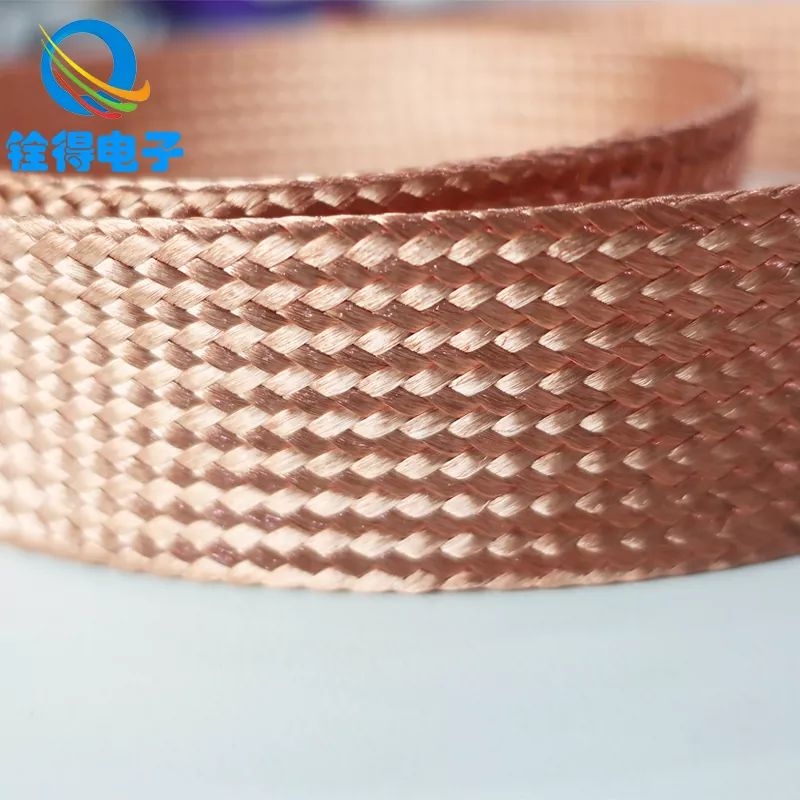
If a copper braid is overheating, treat it like a system problem—because it usually is. Use this quick map to find the root cause instead of swapping parts blindly.
-
Symptom: the braid is hot near the lug
Likely causes: poor crimp, wrong lug size, insufficient compression, oxidation at joint, loose bolt, mismatched plating, contaminated contact surface. -
Symptom: hot spot in the middle of the braid
Likely causes: braid undersized for current, unexpected duty cycle, routing near heat source, internal strand damage from repeated bending. -
Symptom: fraying and broken strands
Likely causes: sharp edge abrasion, excessive movement without strain relief, improper cutting method, lack of sleeving in a rubbing path. -
Symptom: corrosion or discoloration
Likely causes: chemical exposure, humidity, galvanic interaction with dissimilar metals, absence of tin plating where it’s needed. -
Symptom: intermittent grounding or noise
Likely causes: loose mounting, painted surfaces under joint, insufficient contact pressure, contaminated bonding point.
If you can measure it, do: temperature rise testing under load and milliohm checks across joints often reveal issues faster than visual inspection alone.
What Quality Checks Actually Matter for Buyers?
When you’re sourcing copper braided wires at scale, “looks good” isn’t a quality plan. You want consistency, traceability, and proof that the braid and termination will behave the same way across batches.
Here’s what smart buyers typically request:
- Material verification: copper grade and plating type (bare/tinned) stated clearly
- Dimensional consistency: width, thickness, length tolerances, and termination geometry
- Termination process control: crimp tooling standards or welding/pressing method documentation
- Electrical performance checks: resistance targets, sample-based testing plans
- Mechanical integrity: pull tests on lugs/end fittings where applicable
- Packaging discipline: prevention of crushing, contamination, and strand deformation in transit
For buyers who want a stable, long-term supply partner, it’s also worth working with a manufacturer that can customize braid geometry and terminations to match your assembly line constraints. This is where Dongguan Quande Electronics Co., Ltd. is often positioned: providing copper braided wire options that can be adapted for grounding straps, flexible jumpers, and application-specific connection designs—so you’re not forced to “make it fit” after the shipment arrives.
FAQ
What is the difference between copper braided wires and standard flexible cable?
Flexible cable bundles strands inside insulation and is excellent for many power applications, but it can still concentrate stress near terminations and can be bulkier in tight routing paths. Copper braided wires are woven, flatter, and typically used when you want high flexibility, low profile routing, and stable bonding/jumper performance in vibration-prone assemblies.
Should I choose bare or tinned copper braided wires?
If the environment is dry and controlled, bare copper can be perfectly fine. If you expect humidity, condensation, or long service life with minimal maintenance, tinned copper is commonly preferred because it slows corrosion and helps keep joint surfaces more stable over time.
How do I size a braid for current?
Start with the required continuous current, peak current (if any), duty cycle, and acceptable temperature rise. Then match to an appropriate equivalent cross-sectional area and confirm your termination method won’t introduce high resistance. If you’re uncertain, prototype and measure temperature rise under real load conditions.
Why does my braid get hot even when it looks thick enough?
In many cases, the braid isn’t the issue—the joint is. Poor crimping, oxidation under a lug, loose bolts, or painted mounting surfaces can add contact resistance that turns into heat. Correct surface prep and controlled termination processes usually solve it.
Can copper braided wires help with EMI or electrical noise?
They can, especially as part of a well-designed grounding and bonding strategy. A braid’s geometry can offer low impedance paths that help stabilize grounding, but EMI control is system-level—routing, enclosure bonding, and connection integrity all matter.
What information should I send a supplier to get an accurate quote?
Provide required length, braid width/thickness (or equivalent cross-section), bare vs tinned, insulation/sleeving needs, termination type (lug/welded/pressed), hole diameter, quantity, and application notes (vibration, temperature, environment). A simple drawing is often the fastest way to avoid misunderstandings.
Closing Thoughts
Copper braided wires are a practical upgrade when your priority is reliability under movement: fewer cracked conductors, more stable grounding, and connections that don’t “mysteriously” loosen over time. The trick is to stop treating braid as a commodity and start treating it as an engineered component: size it for the job, specify plating for the environment, and control the termination details that determine resistance and heat.
If you want to streamline specification, customization, and repeatable quality for copper braided wires—especially for grounding straps and flexible jumper assemblies—work with a manufacturer that can match braid construction to your real installation constraints. Dongguan Quande Electronics Co., Ltd. can support application-based braid selection and tailored terminations to help you reduce failures, simplify assembly, and keep systems running cooler and more stable—contact us to discuss your requirements.
Send Inquiry


X
We use cookies to offer you a better browsing experience, analyze site traffic and personalize content. By using this site, you agree to our use of cookies.
Privacy Policy