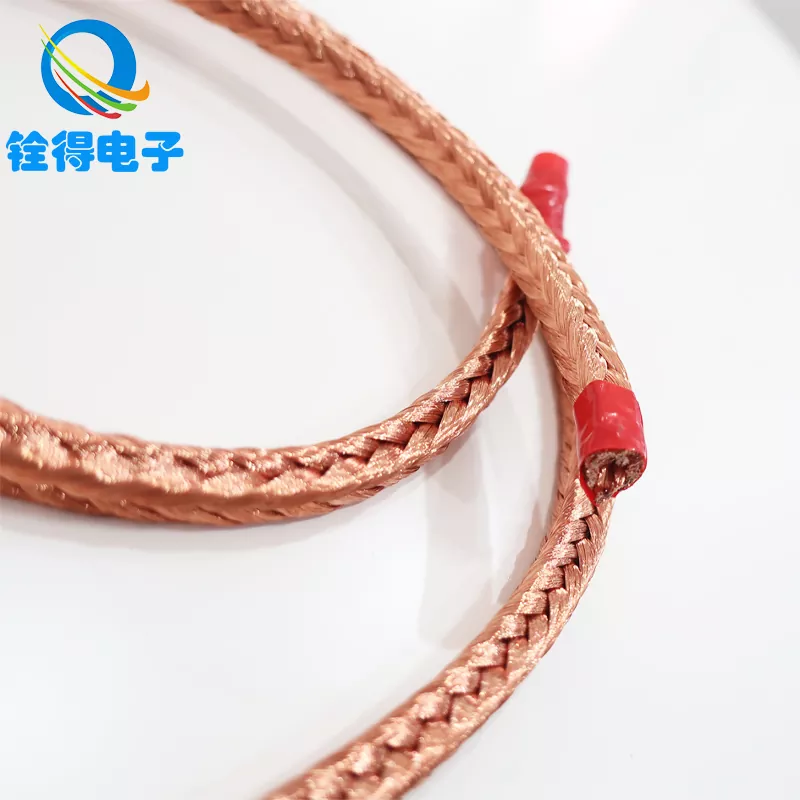
Square copper braided wire is a flexible electrical conductor made by interweaving multiple fine copper wires into a flat or square-profile braided structure. It is used in electrical equipment, power distribution systems, grounding connections, switchgear, transformers, industrial machinery, and other applications where electrical conductivity and mechanical flexibility are important. Compared with a solid conductor of similar overall dimensions, a braided structure can accommodate movement, vibration, and installation requirements more effectively in suitable applications.
However, selecting the right product requires careful consideration of copper purity, wire diameter, braid construction, cross-sectional area, dimensions, surface treatment, and operating conditions. This guide explains how square copper braided wire is manufactured, what technical specifications buyers should evaluate, how to choose a reliable Square Copper Braided Wire Manufacturer or Supplier, and what to confirm before placing a custom or bulk order.
- What Is Square Copper Braided Wire?
- Why Is Square Copper Braided Wire Used in Electrical Systems?
- How Is Square Copper Braided Wire Manufactured?
- Which Technical Specifications Should Buyers Evaluate?
- What Are the Common Applications of Copper Braided Wire?
- How Do Material and Surface Treatments Affect Performance?
- How Does a Professional Factory Ensure Product Quality?
- How to Choose a Reliable Square Copper Braided Wire Supplier?
- What Should Buyers Confirm Before Bulk Purchasing?
- Common Purchasing Problems and Practical Solutions
- Frequently Asked Questions
1. What Is Square Copper Braided Wire?
Square copper braided wire is an electrical conductor manufactured by braiding multiple fine copper strands together to form a compact, flexible structure. Depending on the production design, the finished braid can have a square, rectangular, or relatively flat profile. Its geometry and dimensions can be customized to suit different connection spaces and electrical requirements.
Unlike a conventional solid copper bar or single-core conductor, braided wire consists of numerous smaller wires. These strands work together to create a conductive path while allowing the assembly to bend or accommodate limited movement. This construction is particularly useful where rigid connections may experience vibration, thermal expansion, installation stress, or repeated movement.
Main Characteristics
- Electrical conductivity: Copper provides a highly conductive path for electrical current.
- Mechanical flexibility: Multiple fine strands allow the braid to bend more easily than many rigid conductors.
- Custom dimensions: Width, thickness, strand diameter, and braid construction can be designed for specific installations.
- Compact structure: A square or rectangular profile can fit certain connection layouts and equipment spaces.
- Multiple connection options: The braid can be supplied in different lengths and may be combined with terminals or other connection components.
For industrial buyers, the most important point is that a square copper braid should be selected according to its actual electrical and mechanical requirements. Its appearance alone does not determine its suitability for a particular installation.
2. Why Is Square Copper Braided Wire Used in Electrical Systems?
Electrical equipment often contains connections that must carry current while accommodating vibration, movement, or thermal changes. A rigid connection may transfer mechanical stress to terminals or adjacent components. A properly designed copper braid can help accommodate these conditions while maintaining an electrical connection.
Flexibility for Installation
Flexible braided conductors can be routed through spaces where rigid copper bars are difficult to install. Their construction makes them useful for connecting components with different positions or limited movement during operation. The required bending radius and installation space should still be checked against the product design.
Support for Vibration-Prone Equipment
Transformers, generators, switchgear, and industrial machinery may experience mechanical vibration. Flexible copper connections can help reduce the transfer of movement-related stress to connection points when properly designed and installed.
Accommodation of Thermal Movement
Electrical components can expand and contract as their operating temperatures change. A flexible braid may accommodate some relative movement between connected parts. Its suitability depends on the conductor dimensions, braid construction, temperature conditions, and connection design.
Space-Efficient Connection Design
A square or rectangular braid can be designed to match a specific connection route or equipment layout. This can help engineers integrate flexible electrical connections into compact assemblies without relying entirely on rigid conductors.
3. How Is Square Copper Braided Wire Manufactured?
Manufacturing quality directly affects the consistency, flexibility, dimensions, and electrical performance of braided copper wire. A professional Square Copper Braided Wire Factory should control the important production stages rather than treating braiding as a single isolated operation.
Step 1: Copper Wire Material Preparation
Production begins with copper wire selected according to the required material grade, conductivity, strand diameter, and application. The incoming wire should be checked for surface defects, dimensional consistency, and material documentation where required.
Step 2: Wire Drawing and Strand Preparation
Copper wire may be drawn to smaller diameters to achieve the strand dimensions needed for the braid. Fine strands can contribute to flexibility, while strand count and arrangement influence the final construction. The exact design depends on the product specification.
Step 3: Braiding Process
Multiple strands are interwoven using braiding equipment. The braiding pattern, number of carriers, strand arrangement, and production tension affect the structure and finished dimensions. Consistent tension helps maintain a uniform appearance and reduces irregularities along the braid.
Step 4: Profile and Dimension Control
The braid is formed or finished to the specified profile. For square or rectangular products, manufacturers need to control the width, thickness, and shape consistency. Buyers should clarify whether dimensions refer to nominal measurements or actual finished measurements under a defined inspection method.
Step 5: Cutting and End Processing
Depending on the order, the braid may be cut to specified lengths, prepared for terminal installation, or supplied as a continuous length. If terminals are included, connection methods and end-processing requirements should be clearly defined.
Step 6: Inspection and Packaging
Finished products are checked against the approved specifications. Inspection may include dimensional checks, visual examination, electrical testing, and verification of terminal or surface-treatment requirements. Suitable packaging helps prevent tangling, deformation, contamination, and damage during transportation.
4. Which Technical Specifications Should Buyers Evaluate?
When sourcing square copper braided wire, buyers should provide a clear technical specification. A product described only by its width or appearance may not contain enough information for a manufacturer to produce a consistent result.
| Specification | What It Describes | Why It Matters |
|---|---|---|
| Copper Material | Copper grade, purity, and material condition | Influences conductivity and material consistency |
| Strand Diameter | Diameter of each individual copper wire | Affects braid construction and flexibility |
| Strand Count | Number of individual wires in the braid | Helps define the conductor structure |
| Cross-Sectional Area | Nominal or calculated conductive area | Important for electrical design and current requirements |
| Width and Thickness | Finished profile dimensions | Determines fit and installation compatibility |
| Length | Required finished or supplied length | Supports equipment layout and assembly planning |
| Surface Treatment | Bare copper, tin-plated copper, or other agreed finish | Influences surface behavior and environmental suitability |
| Terminal Design | Connection type, hole size, and terminal material | Ensures compatibility with the equipment connection |
Cross-Sectional Area and Current Requirements
Cross-sectional area is an important parameter in conductor selection. However, buyers should avoid choosing a braid based on a simple visual comparison with a solid copper conductor. The effective conductive area, braid geometry, contact conditions, and thermal environment all matter.
For electrical applications, the required current rating should be determined using the applicable engineering standards and installation conditions. A Square Copper Braided Wire Manufacturer should provide relevant technical information where available, but final conductor selection should be confirmed by the equipment designer or qualified electrical engineer.
Dimensions and Tolerances
Dimensional tolerances should be agreed before production. For example, a braid intended for a narrow connection space may require closer control of thickness and width than a general-purpose flexible conductor. Buyers should specify the measurement method and acceptable tolerance range to avoid disputes during inspection.
5. What Are the Common Applications of Copper Braided Wire?
Square copper braided wire is used in a range of electrical and industrial applications where a flexible conductive connection is required. The exact product configuration should be matched to the operating environment and connection design.
Power Distribution Equipment
Flexible copper braids may be used in switchgear, distribution cabinets, busbar connections, and other electrical assemblies. They can connect components that require a degree of movement or installation flexibility.
Transformers and Generators
Transformer and generator assemblies can contain connections exposed to vibration, temperature variation, or mechanical movement. Properly designed flexible copper connections can help accommodate these conditions.
Grounding and Bonding Systems
Copper braids are also used in grounding and bonding arrangements. The conductor size, termination method, environmental exposure, and required electrical characteristics must be considered to ensure the connection meets the system design.
Industrial Machinery
Industrial equipment may require flexible conductors between moving assemblies, electrical terminals, or machine components. A custom braid can help meet specific space and installation requirements.
Electrical and Electronic Equipment
Some electrical devices use braided copper connections for internal bonding, flexible links, or other conductive paths. The product should be selected according to the device's operating current, temperature, vibration, and available space.
| Application | Typical Requirement | Selection Consideration |
|---|---|---|
| Switchgear | Flexible electrical connection | Current, clearance, terminal arrangement |
| Transformer | Connection accommodating vibration and movement | Temperature, conductor size, installation layout |
| Grounding System | Reliable conductive bonding path | Electrical requirements and connection integrity |
| Industrial Machinery | Flexible connection between components | Movement, vibration, and mechanical protection |
| Electrical Equipment | Compact internal conductive link | Space, dimensions, and operating conditions |
6. How Do Material and Surface Treatments Affect Performance?
The copper material and surface condition influence how a braided conductor performs in its intended environment. Buyers should consider the electrical system, surrounding atmosphere, connection materials, and maintenance requirements before selecting a finish.
Bare Copper Braided Wire
Bare copper braid provides a direct copper surface and is used in many general electrical applications. It may be suitable for controlled indoor environments where the surface condition and connection requirements are properly managed.
Tin-Plated Copper Braided Wire
Tin plating is commonly used to provide a protective surface layer and improve compatibility with certain connection environments. It can be considered where surface oxidation or environmental exposure is a concern. Buyers should confirm plating thickness, coverage, and applicable requirements with the manufacturer.
Other Surface Requirements
Some projects may require additional surface or material specifications. These should be evaluated according to the intended operating conditions rather than selected solely for appearance. The manufacturer should confirm whether the requested treatment is available and how it affects dimensions, cost, and lead time.
Why Material Consistency Matters
Inconsistent copper wire can create differences in strand dimensions, braid appearance, and electrical properties. A reliable Square Copper Braided Wire Supplier should be able to explain its material sourcing and incoming inspection process. Where material traceability is required, buyers should request the relevant documentation before placing the order.
7. How Does a Professional Factory Ensure Product Quality?
Quality control should cover raw materials, braiding operations, dimensional consistency, finishing, and final product verification. A professional factory should have defined inspection procedures and be able to explain how it checks products against customer specifications.
Key Quality Control Checks
- Verify copper material and relevant material documentation.
- Check strand diameter and construction consistency.
- Inspect braid uniformity and visible surface defects.
- Measure finished width, thickness, and length.
- Check surface treatment and plating coverage where applicable.
- Verify terminal dimensions and connection quality if terminals are supplied.
- Perform agreed electrical tests and review test records.
- Check packaging to prevent deformation and transportation damage.
Electrical Testing
Depending on the product and application, electrical testing may include resistance or conductivity-related checks. The test method, sample size, acceptance criteria, and test conditions should be agreed in advance. Buyers should request test reports when they are part of the purchase specification.
Mechanical and Visual Inspection
Visual inspection can identify broken strands, irregular braiding, contamination, uneven dimensions, and damaged ends. Mechanical checks may be appropriate when the application requires specific flexibility or connection performance. The test method should reflect the actual product design and operating conditions.
Documentation and Traceability
For industrial procurement, documentation can be as important as the physical product. Depending on project requirements, buyers may request material certificates, inspection records, dimensional reports, or product specifications. A supplier should clarify which documents it can provide before order confirmation.
8. How to Choose a Reliable Square Copper Braided Wire Supplier?
Choosing a supplier requires more than comparing quotations. Buyers should evaluate technical understanding, production capability, communication quality, inspection procedures, and the ability to meet delivery requirements.
Check Relevant Manufacturing Experience
Ask whether the supplier has experience producing square copper braided wire, flexible copper connectors, grounding braids, or related electrical conductors. Relevant experience can help the supplier understand braid construction, dimensional requirements, and common installation challenges.
Review Customization Capabilities
A Custom Square Copper Braided Wire Manufacturer may offer different strand diameters, braid structures, dimensions, lengths, surface treatments, and terminal configurations. Buyers should confirm which options are available and whether custom samples can be developed.
Assess Production and Quality Management
Ask how incoming copper materials are inspected, how braiding consistency is controlled, and how finished products are tested. Clear explanations and supporting records provide a more useful basis for evaluation than general claims about quality.
Compare Manufacturer and Trading Supplier Options
A direct manufacturer may provide closer communication with the production team and more control over custom specifications. A trading supplier may offer broader sourcing options or coordinate products from multiple factories. Buyers should identify who is responsible for manufacturing, inspection, technical support, and after-sales communication.
| Evaluation Point | Questions to Ask | Why It Matters |
|---|---|---|
| Manufacturing experience | Do you produce square copper braided wire regularly? | Confirms relevant product experience |
| Material control | What copper material and documentation can you provide? | Supports material verification |
| Customization | Can you produce non-standard dimensions and structures? | Determines suitability for specific projects |
| Testing | Which inspection and electrical tests are available? | Clarifies quality verification capability |
| MOQ | What is the minimum order quantity for custom products? | Helps with purchasing and inventory planning |
| Delivery | What is the expected production lead time? | Supports project scheduling |
9. What Should Buyers Confirm Before Bulk Purchasing?
Before placing a bulk order, buyers should ensure that the technical and commercial requirements are documented. This helps reduce misunderstandings between the engineering, purchasing, and production teams.
Prepare a Complete Product Specification
- Product type and intended application
- Copper material grade and required conductivity
- Individual strand diameter and strand count, if specified
- Cross-sectional area or required electrical performance
- Finished width, thickness, length, and tolerances
- Bare copper or specified surface treatment
- Terminal type, hole dimensions, and connection requirements
- Required testing, inspection, and documentation
- Packaging method and labeling requirements
Request a Sample Before Mass Production
A sample allows the buyer to check the actual braid structure, dimensions, flexibility, surface condition, and connection compatibility. If the product includes terminals, the complete assembly should be evaluated rather than only the braided section.
Clarify MOQ and Quotation Details
MOQ may vary according to material availability, custom dimensions, surface treatment, terminal processing, and production setup. When comparing quotations from different Square Copper Braided Wire Suppliers, confirm that all suppliers are quoting the same specifications and included services.
Confirm Delivery and Inspection Terms
Discuss production lead time, inspection arrangements, packaging, shipping terms, and required documents before order confirmation. For projects with strict delivery schedules, include the expected completion date and any inspection milestones in the purchase agreement.
10. Common Purchasing Problems and Practical Solutions
Problem 1: The Braid Does Not Fit the Installation Space
This may happen when buyers provide only an approximate width or do not specify the finished thickness. Provide a drawing, sample, or complete dimensional specification. Confirm measurement methods and tolerances before production.
Problem 2: Electrical Performance Does Not Match Expectations
Appearance and nominal dimensions alone cannot confirm current-carrying capability. Specify the electrical requirements and operating conditions, then ask the supplier for relevant technical data and test information. Final selection should be checked by a qualified electrical engineer.
Problem 3: The Product Is Too Rigid or Too Flexible
Flexibility depends on strand diameter, strand count, braid construction, dimensions, and finishing. Share the installation conditions and expected movement with the manufacturer so the design can be evaluated appropriately.
Problem 4: Surface Oxidation or Corrosion Concerns
Environmental conditions and storage practices can affect copper surfaces. Discuss whether bare copper or a suitable plated finish is appropriate, and confirm packaging and storage recommendations with the supplier.
Problem 5: Bulk Products Differ from the Approved Sample
Differences can occur when production specifications are incomplete or sample details are not retained. Keep an approved reference sample, written technical drawing, and inspection criteria. Confirm that bulk production follows the same approved requirements.
11. Why Work with an Experienced Copper Braided Wire Manufacturer?
For electrical equipment manufacturers, distributors, and industrial purchasing teams, a reliable production partner can help translate technical requirements into a consistent finished product. The supplier should understand the relationship between copper material, strand construction, braid dimensions, connection design, and the intended operating environment.
Dongguan Quande Electronics Co.,Ltd. is the company brand to contact for inquiries about square copper braided wire and related electrical connection products. Buyers evaluating a potential sourcing partner should communicate their required dimensions, material specifications, surface treatment, terminal design, and application conditions to determine whether the proposed solution matches their project.
When comparing a Square Copper Braided Wire Manufacturer, Square Copper Braided Wire Factory, or Wholesale Copper Braided Wire Supplier, focus on the details that directly affect your application:
- Clear material and dimensional specifications
- Suitable braid construction and customization options
- Documented inspection and testing arrangements
- Consistent production and sample approval procedures
- Transparent quotations and realistic delivery schedules
- Responsive technical and purchasing communication
A well-defined specification and a carefully evaluated supplier help reduce sourcing risks and support reliable electrical connections across industrial applications.
Frequently Asked Questions
1. What is square copper braided wire used for?
Square copper braided wire is used for flexible electrical connections in applications such as switchgear, transformers, grounding systems, power distribution equipment, and industrial machinery. Its suitability depends on the conductor design and operating requirements.
2. What is the difference between square copper braided wire and flat copper braid?
The main difference is the finished profile and dimensional arrangement. Square or rectangular profiles may be designed for specific connection spaces, while flat copper braid is generally wider and thinner. Buyers should confirm the actual width, thickness, and cross-sectional area rather than relying only on product names.
3. Can a Square Copper Braided Wire Manufacturer provide custom sizes?
Many manufacturers can customize strand diameter, strand count, braid dimensions, length, and selected connection features. Availability depends on production equipment and order requirements. Buyers should provide a drawing or detailed specification for evaluation.
4. Is square copper braided wire suitable for high-current applications?
It may be suitable for certain high-current connections when correctly engineered. Current capacity depends on conductive cross-sectional area, temperature rise, installation conditions, cooling, connection resistance, and applicable standards. Electrical design should be confirmed by a qualified engineer.
5. What is the advantage of flexible copper braided wire?
Its multi-strand construction allows it to accommodate bending and certain types of relative movement more easily than many rigid conductors. This can be useful in equipment exposed to vibration, thermal movement, or installation constraints.
6. Should buyers choose bare copper or tin-plated copper braid?
The choice depends on environmental exposure, connection materials, surface requirements, and project specifications. Bare copper is used in many general applications, while tin plating may be considered when a protective surface finish is required.
7. What information is needed to request a quotation?
Provide the copper material, strand diameter, strand count if known, finished dimensions, length, surface treatment, terminal requirements, quantity, and intended application. A technical drawing or physical reference sample can make the quotation process more accurate.
8. What is the MOQ for custom square copper braided wire?
MOQ varies by manufacturer and depends on material, dimensions, customization, production setup, and surface treatment. Buyers should request a quotation for their actual specifications and expected order quantity.
9. How can buyers evaluate a copper braided wire supplier?
Review the supplier's relevant manufacturing experience, material control, customization capabilities, inspection procedures, sample quality, communication, and delivery performance. Ask for technical information and supporting records where required.
10. Can copper braided wire be supplied with terminals?
Some manufacturers offer finished flexible copper connectors with terminals or other end-processing options. Buyers should specify terminal material, dimensions, hole size, connection method, and required assembly details before production.
Looking for a Reliable Square Copper Braided Wire Manufacturer?
Choosing the right copper braided wire requires careful attention to material, braid construction, dimensions, electrical requirements, and installation conditions. A clear specification helps ensure that the finished product meets your equipment and project needs.
Dongguan Quande Electronics Co.,Ltd. welcomes inquiries from electrical equipment manufacturers, industrial buyers, distributors, and OEM customers interested in square copper braided wire and customized conductive connection solutions.
Share your drawings, required dimensions, material preferences, application details, and estimated order quantity. Contact us to discuss your project requirements and request product information or a quotation.
Contact Us for Technical Details and a Quotation