
Which 3.5MM Solder Wick Braid Wire Delivers Clean and Reliable Desoldering Results?
3.5MM solder wick braid wire is a copper-braided desoldering material designed to absorb molten solder during PCB repair and electronic assembly rework. Its performance depends on braid construction, copper quality, flux formulation, width consistency, and proper heating technique. This article covers its working principle, common applications, selection factors, usage instructions, storage practices, and frequently asked questions to help buyers and technicians make informed decisions.
1. What Is 3.5MM Solder Wick Braid Wire?
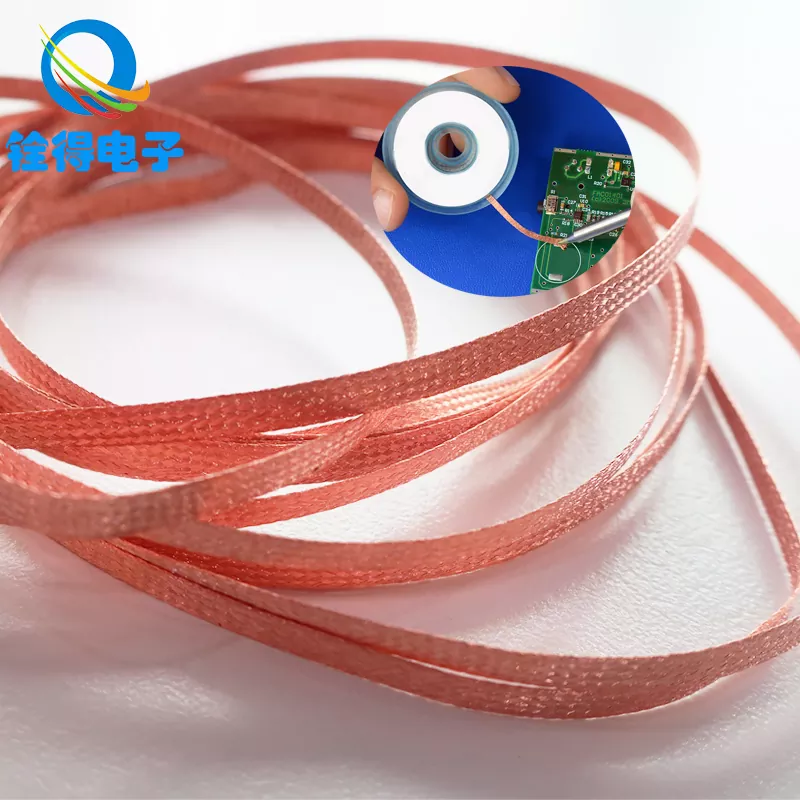
Solder wick, also known as desoldering braid or desoldering wire, is a flexible braided copper material used to remove excess solder from electronic assemblies. It is commonly supplied in a compact spool, allowing technicians to pull out the required length during repair or production work.
A 3.5MM solder wick has a nominal braid width of approximately 3.5 millimeters. This width provides a relatively broad contact area compared with narrow desoldering braids. It can be useful when working on larger solder joints, wider pads, and areas where a greater amount of solder needs to be absorbed.
The braid is generally made from fine copper strands woven into a flat, flexible strip. Many solder wick products are supplied with flux to help improve wetting and solder transfer. The exact braid pattern, copper specification, flux type, and packaging can vary between manufacturers.
Important purchasing point: A 3.5MM width describes the nominal width of the braid, not its solder absorption capacity by itself. Copper strand structure, braid density, flux quality, and manufacturing consistency also influence actual performance.
What Makes Solder Wick Useful?
- Controlled solder removal: Helps remove unwanted solder from selected areas without using a bulky extraction tool.
- Flexible contact: The braid can conform to different pad shapes and accessible soldered connections.
- Convenient operation: A technician can cut or advance the required length from the spool.
- Versatile applications: Suitable for many PCB repair, rework, and electronic maintenance tasks.
2. How Does Solder Wick Remove Excess Solder?
Solder wick works primarily through capillary action. When the copper braid and the solder joint are heated together, the solder melts and wets the copper strands. The small spaces between the braided wires help draw molten solder into the braid.
Flux also plays an important role. It helps remove surface oxides and improves the ability of molten solder to wet the copper. Without suitable wetting conditions, solder may remain on the circuit board instead of transferring efficiently into the braid.
The Basic Desoldering Process
Step 1: Position the braid Place a suitable section of solder wick over the solder joint or pad that needs cleaning.
Step 2: Apply the soldering iron Place the heated iron tip on top of the braid. Heat transfers through the copper strands to the solder underneath.
Step 3: Allow solder to transfer Once the solder melts, it is drawn into the braided copper structure. The visible solder on the pad should gradually decrease.
Step 4: Remove the braid and iron Lift the braid and soldering iron away together while the solder is still molten. Avoid pulling the braid across the pad.
Step 5: Inspect the surface Allow the board to cool and inspect the pad. Repeat with a fresh section of braid if additional solder remains.
The process is simple, but temperature control and handling technique are important. Excessive heat or force can damage copper pads, especially on thin or multilayer printed circuit boards.
3. Why Does the 3.5MM Width Matter?
The width of solder wick affects how much of a solder joint can be contacted at one time. A narrow braid is often convenient for small components and closely spaced pads, while a wider braid can cover a larger surface area.
At approximately 3.5MM wide, the braid can be considered for applications involving broader solder deposits, larger pads, and general PCB rework where the available space allows a wider strip to be positioned safely.
Comparing Common Solder Wick Widths
| Nominal Width | Typical Use | Selection Consideration |
|---|---|---|
| 1.0MM | Very small pads and fine-pitch repair areas | Offers a narrow contact area for confined spaces |
| 1.5MM | Small electronic components and precision work | Useful where access is limited |
| 2.0MM | General PCB repair and component rework | Provides a balance between access and coverage |
| 2.5MM | Medium-sized solder joints and pads | Offers a wider contact area for routine work |
| 3.5MM | Wider pads and larger solder deposits | Requires sufficient working clearance around the target area |
| 4.0MM and above | Broad solder areas and selected heavy-duty rework tasks | May be unsuitable for densely packed components |
These are general application examples rather than fixed industry rules. The correct width depends on the dimensions of the solder joint, PCB layout, component spacing, and the technician's working method.
For buyers sourcing 3.5MM solder wick, it is useful to confirm the actual width tolerance and whether the braid remains consistent throughout the spool.
4. Key Construction Features and Materials
The appearance of two solder wick products may be similar, but their performance can differ because of variations in raw materials and production processes. Buyers should look beyond the nominal width when evaluating product quality.
4.1 Copper Strand Quality
Copper is widely used because of its electrical and thermal conductivity, flexibility, and ability to be formed into fine strands. Consistent copper material helps support predictable heating and solder transfer.
Strands should be woven into a stable braid without obvious breaks, loose sections, or irregular deformation. Poorly controlled construction can make the wick difficult to position and may contribute to inconsistent results.
4.2 Braid Structure and Density
The arrangement of copper strands creates small spaces that allow molten solder to move into the braid. Braid density and strand distribution can influence flexibility, contact behavior, and absorption characteristics.
A braid that is too loose may be difficult to handle consistently, while a very dense construction may behave differently during solder transfer. The appropriate structure should be evaluated through actual application testing.
4.3 Flux Formulation
Many solder wick products contain flux to support solder wetting and oxide removal. Depending on the product, flux formulations may differ in activity level, residue characteristics, and cleaning requirements.
When choosing a fluxed braid, buyers should check whether the flux type is suitable for their electronic assembly process. No-clean, rosin-based, and other flux systems may have different handling and cleaning requirements. Product documentation should clearly identify the applicable formulation and relevant safety information.
4.4 Width and Packaging Consistency
Consistent winding and packaging make solder wick easier to dispense and store. The spool should protect the braid from unnecessary contamination, moisture, and physical damage during transportation and normal storage.
5. Common Applications in Electronics Work
3.5MM solder wick braid wire can support a variety of electronic repair and manufacturing tasks. Its suitability depends on the geometry of the solder joint and the clearance available around the target area.
PCB Repair and Maintenance
Technicians use desoldering braid to remove excess solder from printed circuit board pads during repair. It can help prepare a pad for component replacement or correct a solder deposit that is larger than required.
Component Replacement
When replacing electronic components, old solder may need to be removed from pads or connection points. Solder wick can help clean the area after the component has been detached using an appropriate desoldering method.
Electronic Assembly Rework
In production and rework environments, solder wick can be used for localized corrections, such as removing solder bridges or reducing excess solder on accessible connections.
Connector and Terminal Maintenance
Some connector terminals and soldered wire connections have relatively broad solder deposits. A wider braid may help absorb solder from accessible areas, provided the surrounding materials can tolerate the required heat.
Training and Repair Workshops
For electronics training centers and repair workshops, solder wick is a useful consumable for teaching controlled solder removal, PCB preparation, and basic rework procedures.
Application note: Solder wick is not a universal replacement for solder extractors or specialized desoldering equipment. Large through-hole joints, high-volume solder removal, and thermally demanding assemblies may require a different tool or a combined process.
6. How to Select a Suitable Solder Wick
For purchasing teams, electronics manufacturers, distributors, and repair service providers, choosing the right solder wick involves more than comparing product prices. A suitable product should match the application, work consistently, and arrive in packaging that protects its condition.
Consider These Six Purchasing Factors
- Nominal width: Confirm that 3.5MM is appropriate for the solder joints and PCB layout used in your process.
- Copper braid construction: Review strand consistency, flexibility, and overall weaving quality.
- Flux specification: Confirm the flux type, activity level, residue behavior, and cleaning requirements.
- Absorption performance: Request samples or conduct a controlled test using representative solder joints.
- Spool and packaging: Check the braid length per spool, packaging protection, and dispensing convenience.
- Supplier consistency: Evaluate batch-to-batch quality control, technical communication, and delivery capability.
Questions Buyers Should Ask Before Ordering
| Question | Why It Matters |
|---|---|
| Is the braid width controlled? | Helps ensure consistent fit and contact during use. |
| What copper material is used? | Provides information about material consistency and construction. |
| Is the product fluxed or unfluxed? | Determines whether additional flux may be required. |
| What flux specification is available? | Helps assess compatibility with the assembly and cleaning process. |
| What is the braid length per spool? | Supports cost comparison and inventory planning. |
| Are samples available for evaluation? | Allows technicians to verify performance before bulk purchasing. |
For industrial buyers, sample testing is particularly valuable. A short evaluation using the actual solder alloy, PCB surface finish, and soldering equipment can provide more useful information than relying on product descriptions alone.
7. How to Use Solder Wick Correctly
Even a well-manufactured braid may perform poorly if it is used incorrectly. Proper technique helps improve solder transfer while reducing the risk of pad damage and unnecessary heat exposure.
Recommended Operating Practices
- Select a braid width that fits the target solder joint without covering nearby components unnecessarily.
- Use a clean soldering iron tip with suitable thermal capacity for the joint.
- Apply the wick directly over the solder that needs to be removed.
- Allow sufficient contact for the solder to melt and transfer into the copper braid.
- Avoid pressing excessively hard on the PCB.
- Remove the braid and iron together rather than dragging the braid across the pad.
- Use a fresh section when the current section becomes saturated with solder.
- Inspect the pad after cooling and follow the assembly's cleaning requirements.
Temperature and Heat Management
There is no single soldering temperature that is correct for every PCB and solder alloy. The required setting depends on the solder composition, joint size, copper plane design, iron tip geometry, and board thermal characteristics.
Use the lowest practical temperature and shortest contact time that achieve reliable solder transfer. If solder does not melt effectively, check the iron tip condition, thermal recovery, contact position, and flux compatibility before simply increasing the temperature.
For sensitive components and multilayer boards, follow the equipment manufacturer's recommendations and the applicable rework procedure.
8. Factors That Affect Desoldering Performance
Desoldering results are influenced by the interaction between the braid, solder, flux, and heating equipment. Understanding these factors can help technicians identify problems and purchasing teams compare products more accurately.
Solder Alloy
Different solder alloys have different melting characteristics and wetting behavior. Lead-free and tin-lead solder systems may require different process settings. The wick should be evaluated with the alloy used in the actual application.
Oxidation and Surface Condition
Oxidized solder surfaces may be more difficult to wet. A suitable flux can help, but heavily contaminated joints may require additional preparation or a different repair approach.
Iron Tip Condition
A dirty or poorly tinned soldering iron tip can transfer heat inefficiently. Regular tip maintenance helps establish reliable thermal contact between the iron, braid, and solder joint.
Joint Size and Thermal Mass
Large solder joints and PCB areas connected to extensive copper planes can absorb more heat. A small iron tip or unsuitable heating setup may struggle to melt the solder evenly.
Braid Saturation
Once a section of wick has absorbed solder, its remaining capacity is reduced. Continuing to use a saturated section can slow the process and produce inconsistent results. Moving to fresh braid is usually more effective.
9. Common Problems and Practical Solutions
When solder wick does not work as expected, the cause is not necessarily the braid itself. Reviewing the process step by step can help avoid wasted material and unnecessary PCB damage.
| Common Problem | Possible Cause | Practical Solution |
|---|---|---|
| Solder does not transfer into the braid | Insufficient heat, poor contact, oxidation, or unsuitable flux | Check the iron tip, heating method, and flux compatibility |
| Removal is unusually slow | Large joint, high thermal mass, or saturated braid | Use fresh wick and review the heating setup |
| PCB pad becomes damaged | Excessive heat, prolonged contact, or pulling the braid | Reduce contact time and lift the braid while solder is molten |
| Residue remains after desoldering | Flux residue or contamination | Follow the flux manufacturer's cleaning recommendations |
| Braid is difficult to position | Width is unsuitable for the working area | Choose a width that matches the pad and component spacing |
| Results vary between spools | Differences in construction, flux, or storage condition | Review batch consistency and supplier quality controls |
For repeated production problems, record the solder alloy, board type, iron temperature, contact time, wick specification, and cleaning method. This makes it easier to identify whether the issue comes from materials, equipment, or operator technique.
10. Storage and Handling Recommendations
Solder wick is a consumable material, and its condition can be affected by the environment in which it is stored. Appropriate handling helps preserve braid cleanliness and flux performance.
- Keep the spool sealed: Return unused material to suitable packaging after use.
- Avoid excessive moisture: Store the product in a dry environment according to supplier recommendations.
- Prevent contamination: Keep the braid away from oil, dust, chemicals, and other workshop contaminants.
- Protect the braid: Avoid crushing, bending, or pulling the material unnecessarily.
- Follow shelf-life guidance: For fluxed products, observe the manufacturer's storage conditions and recommended shelf life.
- Use appropriate workplace safety measures: Follow the safety data and handling instructions for the flux formulation.
For businesses purchasing in bulk, inventory rotation and clearly identified batch information can help maintain traceability and reduce the risk of using material that has been stored improperly.
11. What to Expect from a Reliable Solder Wick Supplier
Choosing a supplier is an important part of maintaining stable electronic repair and manufacturing operations. A dependable supplier should provide clear product information and communicate specifications accurately rather than relying only on broad performance claims.
Consistent Product Specifications
Buyers should be able to obtain information about braid width, material construction, spool length, flux type, and packaging. Clear specifications make it easier to compare products and establish purchasing standards.
Practical Sample Evaluation
Samples allow engineers and technicians to check how the braid performs on their own solder joints. Evaluation should include solder transfer, handling, residue behavior, and compatibility with the existing rework process.
Responsive Technical Communication
A professional supplier should be prepared to answer questions about product specifications, application suitability, packaging, and available documentation. This is especially important for distributors and manufacturers with recurring purchasing requirements.
Manufacturer Information
Dongguan Quande Electronics Co.,Ltd. is a company name buyers can use when making product inquiries and discussing soldering-related material requirements. When evaluating a product, customers should request the applicable specifications, sample details, and technical information to confirm that the material meets their process requirements.
For purchasing teams, a clear communication process helps reduce uncertainty, supports product evaluation, and makes repeat orders easier to manage.
12. Frequently Asked Questions
Q1: What is 3.5MM Solder Wick Braid Wire used for?
It is used to absorb and remove excess molten solder from PCB pads, electronic connections, and accessible solder joints. Common applications include circuit board repair, component replacement, and electronics rework.
Q2: What does 3.5MM mean in solder wick?
It refers to the nominal width of the braided copper strip. The actual width tolerance should be confirmed with the manufacturer or product specification.
Q3: Is wider solder wick always better?
No. A wider braid provides a larger contact area, but it may be difficult to position around small components or closely spaced pads. The appropriate width should match the solder joint and available working space.
Q4: Does solder wick need additional flux?
Many products are supplied with flux already incorporated. Whether additional flux is needed depends on the product formulation, solder condition, and application. Follow the manufacturer's instructions and avoid applying incompatible materials.
Q5: Can solder wick remove solder bridges?
Yes. Solder wick can help remove excess solder between adjacent pads when the braid width and heating technique are suitable. Careful positioning is important to avoid disturbing nearby components or damaging fine-pitch pads.
Q6: Why does solder sometimes stick to the PCB instead of the braid?
Possible reasons include insufficient heat, poor thermal contact, oxidation, unsuitable flux, or a contaminated iron tip. Check these conditions before applying more pressure or extending the heating time.
Q7: Can solder wick damage a PCB?
Improper use can damage copper pads, particularly if excessive heat is applied for too long or the braid is pulled across the board. Use controlled heating and lift the braid and iron together while the solder is molten.
Q8: How should used solder wick be handled?
Once a section has absorbed solder, cut it off and use a fresh section for the next joint. Handle used braid carefully because it may remain hot immediately after desoldering.
Q9: What information should I confirm before bulk purchasing?
Confirm the nominal width and tolerance, copper braid construction, flux type, spool length, packaging, batch consistency, and available technical documentation. Testing samples before placing a large order is also recommended.
Q10: Is 3.5MM solder wick suitable for all PCB repair jobs?
No. It is more suitable for applications where a wider braid can be positioned safely. Fine-pitch components and narrow solder joints may require a smaller width, while large through-hole joints may need specialized desoldering equipment.
Find the Right Solder Wick for Your Electronics Applications
Consistent desoldering materials help technicians maintain cleaner PCB surfaces, improve rework efficiency, and reduce unnecessary handling during electronic repair and assembly. Selecting the correct braid width, copper construction, and flux specification is essential for achieving dependable results.
Dongguan Quande Electronics Co.,Ltd. welcomes inquiries from electronics manufacturers, distributors, repair service providers, and industrial buyers. If you are looking for 3.5MM solder wick braid wire or need more information about product specifications, packaging, and purchasing requirements, please contact us to discuss your application and request further product details.
Send Inquiry


X
We use cookies to offer you a better browsing experience, analyze site traffic and personalize content. By using this site, you agree to our use of cookies.
Privacy Policy