
How Can Copper Braid Improve Grounding and EMI Control?
Abstract
Copper Braid is one of those “small parts” that quietly decides whether a system feels rock-solid or becomes a mystery box of noise, heat, and intermittent faults. If you’ve ever dealt with a ground strap that runs hot, a cabinet that hums with interference, or a flexible connection that keeps cracking at the worst possible time, this guide is for you. We’ll break down what Copper Braid actually does, why it fails in real installations, and how to select, terminate, and maintain it so your grounding and shielding stay stable for the long haul.
Table of Contents
- Outline
- The Real-World Pain Points Copper Braid Solves
- What Copper Braid Is (and What It Isn’t)
- How to Choose Copper Braid Without Guessing
- Quick Selection Table
- Termination and Installation That Won’t Fail
- Practical Checks and Verification
- Common Mistakes and Easy Fixes
- Typical Use Cases and Matching the Right Braid
- FAQ
- Next Step
Outline
- Identify the pain point: heat, vibration fatigue, noise, corrosion, or space constraints
- Confirm the job type: grounding strap, bonding, shielding sleeve, or flexible connector
- Pick the braid type: flat vs tubular, bare vs tinned, fine vs coarse strands
- Size it with purpose: cross-sectional area, length, and allowable temperature rise
- Terminate correctly: crimp, weld/braze, or solder (only where appropriate)
- Verify in the field: resistance, temperature, and “wiggle test” under load
The Real-World Pain Points Copper Braid Solves
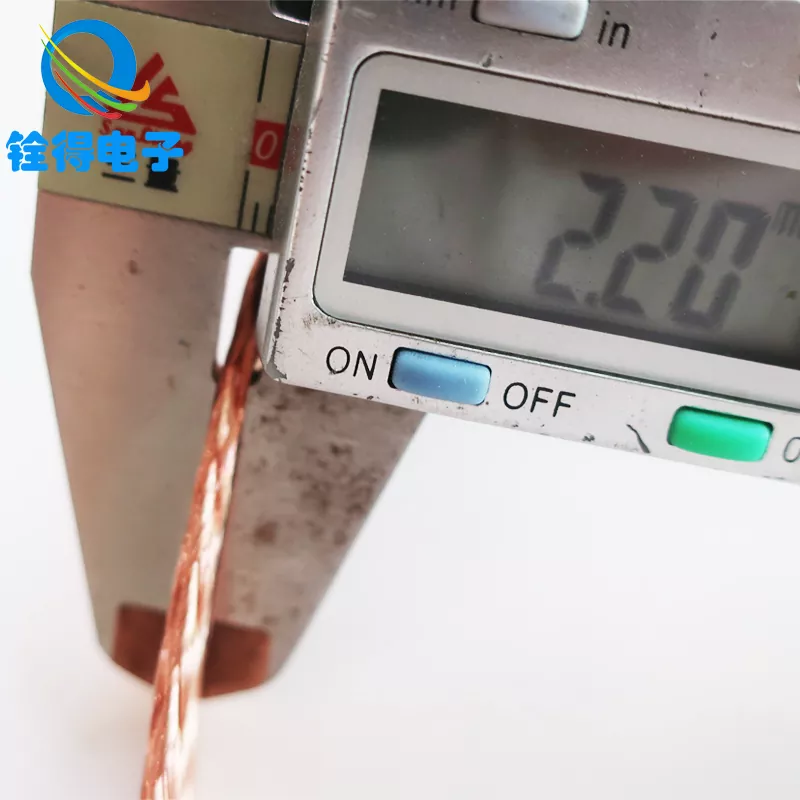
People rarely “want” Copper Braid. What they want is the problem to stop happening. Here are the top pain points Copper Braid is built to address:
- Intermittent grounding caused by vibration, door movement, or thermal expansion
- EMI issues like unstable signals, noisy sensors, or compliance headaches
- Hot spots at flexible jumpers where a solid cable can’t survive repeated motion
- Corrosion at exposed bonding points, especially in humid or salty environments
- Space limits where a round cable is too stiff or too bulky to route safely
The key advantage is flexibility. Copper Braid spreads bending stress across many fine strands, which helps it tolerate motion better than a rigid conductor. It can also provide a broad contact area for bonding and shielding applications—when installed correctly.
What Copper Braid Is (and What It Isn’t)
Copper Braid is a woven conductor made from many copper strands. It can be manufactured as a flat braid (common for grounding straps) or a tubular braid (often used as a shielding sleeve over cables).
What it is great at:
- Flexible bonding between moving parts (doors, lids, motor frames, removable panels)
- Low-impedance paths at higher frequencies when geometry and terminations are optimized
- Mechanical durability compared with a single solid conductor in repeated flex
What it is not:
- A magic fix for poor grounding layouts (long loops and sloppy bonds still cause trouble)
- A substitute for correct conductor sizing (too small will still heat up)
- Immune to bad terminations (most “braid failures” are termination failures)
In practical sourcing, you’ll often see bare copper and tinned copper. Tinned copper is popular when oxidation resistance and easier solderability are priorities. Bare copper can be a strong choice for controlled, dry interiors where maximum conductivity and cost efficiency matter.
Many engineers and buyers work with manufacturers such as Dongguan Quande Electronics Co.,Ltd. when they need Copper Braid options tailored to grounding straps, shielding sleeves, or custom flexible connectors for different installation realities.
How to Choose Copper Braid Without Guessing
Choosing Copper Braid is easiest when you stop thinking in “braid = braid” and instead decide based on the job it must survive. Use this checklist:
- 1) Current and temperature rise: If the braid is carrying current (not just bonding), size it so it won’t run hot. Heating usually shows up first at terminations, then along the braid. When in doubt, choose a larger cross-section or parallel multiple braids.
- 2) Flex life and motion pattern: A strap that bends 10 times a day is different from one that vibrates continuously. For frequent flexing, prefer finer strands and adequate slack. Avoid sharp bends and “hinge points.”
- 3) Environment: Humidity, salt fog, chemical vapors, and outdoor exposure push you toward tinned copper and protected bonding surfaces. If dissimilar metals are involved (for example, copper braid bonded to aluminum), plan for corrosion control with proper hardware and surface prep.
- 4) Geometry and length: Shorter is usually better for performance. Keep the braid as short as possible while still allowing movement. Wide, flat braids can improve bonding area and reduce inductive effects compared with a long, thin lead.
- 5) Termination method: Decide early: crimp, weld/braze, or solder. This determines what braid construction and plating make sense. (And yes, terminations matter more than most people want to admit.)
Quick Selection Table
| Scenario | Recommended Copper Braid Style | Material Finish | Key Notes |
|---|---|---|---|
| Cabinet door bonding strap | Flat braid strap | Tinned copper | Allow slack; use clean metal-to-metal contact at both ends |
| High-vibration motor frame bonding | Flat braid, finer strands | Tinned copper (often preferred) | Avoid tight bends; secure to reduce whipping |
| Cable shielding sleeve | Tubular braid sleeve | Tinned copper | Ensure proper 360° termination where possible |
| Battery / inverter flexible jumper | Thicker flat braid or laminated braid | Depends on environment | Size for current; check temperature under real load |
| Grounding in humid / coastal conditions | Flat or tubular, as needed | Tinned copper | Prioritize corrosion control and sealed hardware |
Termination and Installation That Won’t Fail
If Copper Braid “mysteriously” fails, it’s usually because the termination was treated like an afterthought. Here’s how to make the connection last:
- Surface preparation: Clean, bright metal contact surfaces beat “tightening harder.” Remove paint/oxide where bonding is required, and protect the joint afterward as needed.
- Crimping done right: Use the correct lug and die profile for the braid’s thickness and width. A bad crimp creates high resistance and heat. A good crimp becomes mechanically stable and electrically consistent.
- Weld / braze options: For demanding applications (high current or harsh vibration), welded or brazed terminations can outperform soldering by minimizing creep and thermal fatigue. This depends on your assembly process and materials.
- Soldering with caution: Solder can wick up the braid and turn a flexible strap into a stiff “stress riser” that snaps at the edge of the soldered zone. If soldering is required, keep wicking controlled and provide strain relief.
- Strain relief and routing: Give the braid a gentle curve. Avoid sharp folds. Prevent the braid from rubbing on edges. If the braid moves, it should move smoothly—not scrape, kink, or whip.
A simple rule: the braid should be the flexible element, not the termination point. If your joint becomes the hinge, you’ll get fatigue cracks and resistance growth.
Practical Checks and Verification
You don’t need a lab to confirm whether Copper Braid is doing its job. These practical checks catch most issues early:
- Resistance check (baseline): Measure joint-to-joint resistance after installation, then re-check after vibration or thermal cycling.
- Temperature check (under load): If the braid carries current, run the system and look for hot spots at lugs and contact faces.
- Visual inspection: Look for darkening, greenish oxidation, broken strands, or loosened hardware.
- Wiggle test: With power off and safe procedures followed, gently flex the assembly and see if the joint feels mechanically stable.
If resistance creeps upward over time, treat it as an early warning. The braid rarely “suddenly fails”—it degrades until the system becomes unreliable.
Common Mistakes and Easy Fixes
-
Mistake: Using a braid that’s too narrow because it “fits.”
Fix: Size for current and duty cycle. If space is tight, consider multiple braids in parallel or a different geometry. -
Mistake: Over-soldering and turning the braid into a rigid bar.
Fix: Prefer crimp or controlled termination methods and add strain relief. -
Mistake: Bonding onto paint, oxide, or contaminated surfaces.
Fix: Prepare the surface properly and protect it after assembly if needed. -
Mistake: Long, looping braid runs that act like antennas.
Fix: Keep it short, direct, and mechanically supported. -
Mistake: Ignoring corrosion at dissimilar metal joints.
Fix: Use appropriate hardware, coatings, and joint protection suited to the environment.
Typical Use Cases and Matching the Right Braid
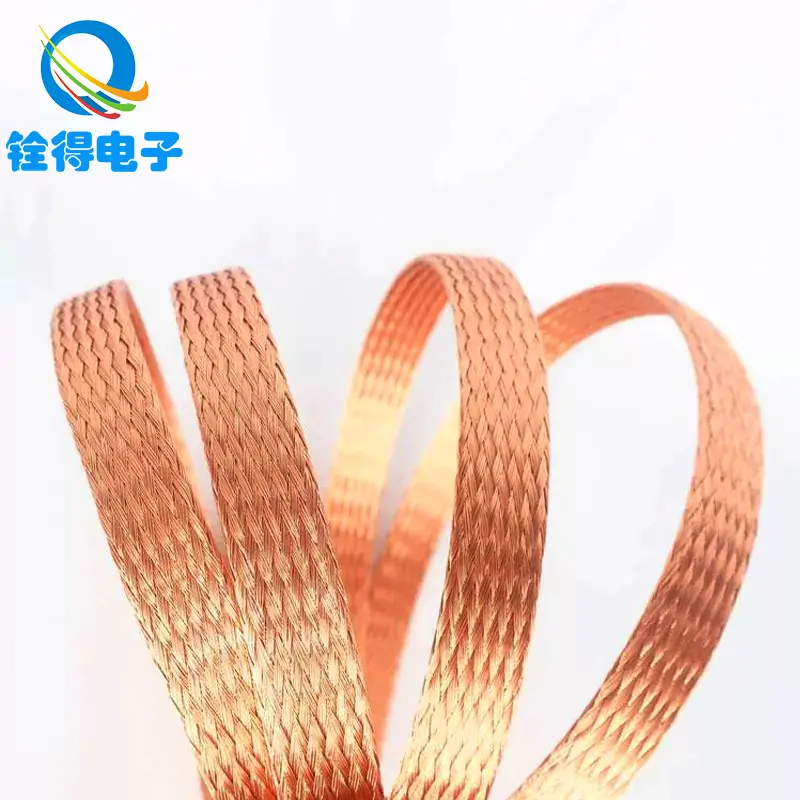
Copper Braid shows up in many industries because it solves a specific combination of electrical and mechanical needs. Here are common use cases and what to prioritize:
- Control cabinets and enclosures: Prioritize reliable bonding for doors and removable panels. Flat Copper Braid straps with robust lugs are common.
- Automation and robotics: Prioritize flex life and strain relief. Motion cycles punish poor routing more than most people expect.
- Power electronics (inverters, drives, UPS): Prioritize current capacity and thermal stability. Verify temperature under real operating load.
- Cable shielding sleeves: Prioritize consistent coverage and proper termination technique. A great sleeve with a poor end connection won’t deliver consistent results.
- Telecom and instrumentation: Prioritize low-noise bonding and stable connections that don’t drift over time.
When you source Copper Braid, the most helpful suppliers will ask about environment, motion, current, and termination method—because those details determine whether the braid will behave like a long-term solution or a recurring maintenance item.
FAQ
1) Is tinned Copper Braid always better than bare copper?
Not always. Tinned Copper Braid is excellent for corrosion resistance and can be easier to work with in certain assembly methods. Bare copper can be ideal in clean, dry environments where oxidation risk is low and maximum conductivity is the priority.
2) Why does my Copper Braid get hot at the ends?
Hot ends usually point to high resistance at the termination: poor crimping, contaminated surfaces, loose hardware, or a joint that’s too small for the current. Fix the termination first before blaming the braid.
3) Can Copper Braid replace a standard ground wire?
Copper Braid is best when you need flexibility, broad bonding area, or a robust strap that survives movement. For static, protected runs, a standard conductor may be simpler. Many systems use both—each where it makes sense.
4) How short should a grounding braid be?
As short as practical while still allowing movement and safe routing. Extra length can add unwanted loop area and mechanical floppiness. A gentle curve is better than a long loop.
5) What’s the biggest installation mistake with Copper Braid?
Treating it like “just a piece of copper” and ignoring termination quality and surface prep. The joint is the system. If the joint is unstable, performance will drift and failures will follow.
6) How do I prevent fatigue cracking in a moving strap?
Provide slack, avoid sharp bends, keep the termination from becoming the hinge, and prevent rubbing on edges. If motion is frequent, choose a construction meant for repeated flexing and add strain relief.
7) Can Copper Braid help with interference issues?
Yes—when used as a bonding strap or a shielding sleeve with correct routing and termination. If noise persists, review the full grounding layout and ensure bonds are short, clean, and consistent.
Next Step
Copper Braid works best when it’s treated like a designed component—selected for the environment, sized for the job, and terminated with care. Do that, and you get stable grounding, fewer noise surprises, and far less “why is this failing again” maintenance.
If you’re selecting Copper Braid for grounding straps, shielding sleeves, or custom flexible connectors and want a recommendation based on your real application details, Dongguan Quande Electronics Co.,Ltd. can support specification matching and production options—contact us to discuss your requirements and get a solution that fits your installation conditions.
Send Inquiry


X
We use cookies to offer you a better browsing experience, analyze site traffic and personalize content. By using this site, you agree to our use of cookies.
Privacy Policy